My earliest memories of Local Hero come from Golden Gate Video. The store's comedy section was pressed up against the back left wall, across from the mini fridge with the 50¢ sodas. For years, Local Hero's enigmatic VHS cover watched over me as I scanned across new Adam Sandler releases and middle-period Bill Murray fare, always registering but never quite prompting me to rent it. This lasted until late middle school, when I rented the tape on one of our earliest family vacations to the Stanford Inn by the Sea in Mendocino. All at once, the film's soggy, vaguely enigmatic cover art gave way to a subtle but fully realized little world, reflecting a foggy Northern California coastline with an almost uncanny accuracy.
I began to collect DVDs in 2001, after noticing a Tower Records ad for the entire first season of The Simpsons miraculously spread across only 3 discs. Counter to my Mom's concerns that the discs were audio-only CDs, I in fact discovered not only visual quality surpassing any home media I'd seen before, but supplemental features; creator commentaries provided precious new insights into The Simpsons, but also introduced me to a way of learning about the media I loved which I would never have dreamed of. I quickly learned that not all DVDs were created equal. Transfers, special features, and even cases varied substantially between releases, with lower profile releases slipping into stores without the bells and whistles afforded their more popular counterparts. So it was that Local Hero arrived to my home in a snapcase, accompanied only by its trailer with a transfer that barely surpassed the preceding VHS releases in quality (albeit in widescreen).
Local Hero stuck with me through the ensuing years like few movies ever have. I watched it repeatedly in 2004 after losing my vision, with Ferness serving a perfect getaway after appointments. I included a rip of the film in the care package I sent my wife as she studied abroad shortly after we started dating -- a choice which in retrospect seems to say as much about how highly I thought of her as vice versa. As the years went by, I became more conscious of the high grain transfer with successive viewings on TVs at home and mobile device screens I'd bring on planes. My archaic DVD slipped quietly out of print, and in the absence of an American market replacement version (save a similarly bare bones appearance in a Burt Lancaster 4-in-1 pack), I settled with an understanding that my much loved disc would have to be enough.
I bought my first Criterion Collection DVD in 11th grade and began collecting them in earnest in college. When I joined My Criterion, I entered Local Hero as the film I'd most like to see added to the Collection. More than a decade later, the June email announcing future releases arrived with Local Hero as a surprise inclusion, characteristically tucked away second from the bottom. Three long months later, my snapcase DVD could at last be retired, likely 18 years after its original purchase.
The upgrade justifies the wait. The transfer looks terrific, offering well deserved clarity to the film's beaches and the craggy faces of its remarkable character actors alike. The abundant archival material is accompanied by an impressive amount of extras from director Bill Forsyth, who's largely retired from the industry since my old DVD was pressed. Local Hero's soft-spoken personality has always belied both the nuance of its characterizations and its assured craftsmanship, and it was never going to clamor for a reexamination (let alone the princess treatment) on its own. I hope this rerelease can help to broaden the film's exposure and call attention to it as the Great Movie it really is. For me, it's wonderful after half a lifetime thus far to see Local Hero with some of the visual haze stripped away, but the foggy core ever intact.
In November, my girlfriend introduced me to Metro-Land, a 1973 BBC documentary she'd watched two years prior in class while studying abroad in London. The film was written and narrated by John Betjeman, a onetime Poet Laureate of the UK and leading enthusiast of British railroads. It's a wonderful film populated by fascinating characters, and blessed with a unique and diverse soundtrack ostensibly curated by the author. The film has never been released in America, and is available only via Region 2 DVD or torrent; the soundtrack has never been released anywhere, and the quest to identify and acquire the music heard during the film served as a rare diversion while studying for Boards [1].
Music begins Metro-Land at center stage: the film begins with a sped-up montage documenting the length of a line on a Metropolitan Railway train starring the frantic music used to score it.
The tune is a rendition of Scott Joplin's standard "Tiger Rag," as performed by The Temperance Seven, who gained short-lived fame during the traditional jazz craze that swept England in the years immediately preceding the rise of The Beatles. To up the frantic factor, a 33⅓ rpm record was played at 45 rpm; it starts the show with a bang, and listening to the unaltered recording (below) shows it to have been an astute decision.
"Tiger Rag," along with other music used throughout Metro-Land, is identified in the screenplay included in the 1976 compendium The Best of Betjeman. (The entire book is a worthwhile selection of his poetry and prose; the third section comprises the script and is available for download as a PDF here.) In all, 14 recordings were selected for use in Metro-Land, outlined below. There are also four featured diegetic tracks: one choir performance of the Harrow School Song ("Forty Years On") and an organ medley played by Len Rawle in one of the film's most memorable sequences.
Of the 14 selections not performed onscreen, 10 or 11 [2] are directly identified in The Best of Betjeman. Five of these were released together in 2015 by Cherry Red Records as part of a fascinating collection. The compilation opens with the entirety of the Temperance Seven's first album, which itself began with "Tiger Rag"; the other tracks from Metro-Land included in the compilation are "Build a Little Home" by Roy Fox and His Band (recorded in 1934); "Masculine Women and Feminine Men" by The Savoy Havana Band (1926); "The Sunny Side of the Street" by Jack Hylton and His Orchestra (1930); and "Golfing Love" by Melville Gideon (1923).
Three others mentioned by name in the book are easily found for purchase today. The Osmonds' "Down by the Lazy River" and Bread's "Everything I Own" were both legitimate hits in 1972. The third song, also released in 1972, was "Neasden!" by William Rushton, a comedy record celebrating the dubious attractions of the titular, run-down-looking London suburb. It was originally released on Spark Records by the satire magazine Private Eye and has since found its way onto compilation albums. For its inclusion in Metro-Land, "Neasden!" was specially remixed from the original master tapes to highlight the lyrics, which producers felt had been "slightly overwhelmed" by the "rambunctious backing by 'The Ron Watford Sound'."
Four of the remaining six tracks are classical compositions. Two are directly named in The Best of Betjeman: "Civic Fanfare" by Edward Elgar and "Solemn Melody" by Walford Davies. An orchestral crescendo appears in the film and is identified in the script as "‘The Witch of Endor,’ ‘Le Roi David’ ‒ Honegger." The sequence is found in the twelfth movement of Arthur Honegger's Le roi David suite, entitled "Beschwörung der Hexe von Endor." The final classical piece was described in the script as "‘Double Concerti’ ‒ Handel." With the help of a stranger on Reddit, it's been identified as the first movement in Handel's Concerto a due cori No. 2. In all four cases, it's proved predictably difficult to identify the precise recording used in the film.
A similar challenge was presented by one of the remaining two pieces, identified in the script only as "‘Tit Willow’ ‒ Gilbert and Sullivan." Wikipedia revealed the song to be the 3rd-to-last number in The Mikado, which has been recorded innumerable times in a near-equal number of places. Luckily, an unusual arrangement was chosen for use in the film - entirely instrumental, including the usually-sung vocal line. A quick(ish) survey of the available recordings of "Tit Willow" on Spotify allowed me to positively identify the recording selected for use by Betjeman as the version performed by the Cyril Ornadel Orchestra. Few-to-no details on the recording seem to be available on the internet beyond the title and artist.
The final recording used in the film is identified in the script as "‘When the Daisy Opens her Eyes’ ‒ Albert Sandler." Not much else of the song exists - anywhere. "When the Daisy Opens her Eyes" was apparently composed by Haydn Wood, and trace references to the song appear on Google in prewar archive documents including copyright catalogs and social newsletters. Effectively all online references to the Sandler recording, however, are from copies of Metro-Land's Wikipedia article, citing the song's inclusion in the aforementioned script.
Not much exists on Sandler himself, either. A bare-bones life story was distributed in the 40s on the reverse of a trading card packaged with Wills's Cigarettes (right), and as time has elapsed, little has been added. By far his most extensive online biography is a 3 paragraph write-up by AllMusic's Bruce Eder, which aptly begins, "One would never know it from the neglect heaped on him since World War II, but violinist Albert Sandler was one of the more popular orchestra leaders in England during the period between the two world wars, and a leading name in the field of light classical music." Per Eder, Sandler was born in 1906 and died in 1948, and at his 1940s peak was a popular bandleader whose orchestra often appeared on BBC radio. For Sandler, "When the Daisy Opens Her Eyes" may have been an occasional setpiece, or perhaps even a staple as he led his bands through performance after performance in hotel ballrooms first in Eastbourne, and later in London. For me, it has become a White Whale.
Given that Metro-Land was released 25 years after Sandler's death, I can think of three possibilities for "When the Daisy Opens Her Eyes." First, The Best of Betjeman may have simply mistaken the title or artist of the song [3] (though I hope not). Second, the recording may have been made exclusively for radio broadcast. This would explain how hard it's been to find, and it's conceivable given that both Metro-Land and any radio performance of the song would have been made under the aegis of BBC. However, one of the few other references to both Albert Sandler and "When the Daisy Opens Her Eyes" to be found on the internet is from a 1950 radio guide to a now-repurposed Melbourne radio station [4], which was never affiliated with BBC and is therefore unlikely to have enjoyed access to BBC radio archives.
All of which leads me to guess that the song must have been recorded for release on record. So where is it? To date, I've come across four Albert Sandler compilations in person or on the internet, precisely zero of which include "When the Daisy Opens Her Eyes." By my best count, I've also come to recognize 80 records released during Sandler's lifetime on 78rpm shellac. This amounts to 160 tracks; 156 of these were released by Columbia Records [5], and again, zero of them are titled "When the Daisy Opens Her Eyes." I expect that the song was recorded for and released by Columbia. It would have been destined to one of the same two fates as other releases of its day. Some records sold well, and were produced in sufficient quantity and distributed sufficiently widely to ensure that some number survived to the modern day [6]. Others never took off, and became rarities out of proportion to more recent unpopular records, having been both (a) less able to coast on the strength of popular songs with which they were packaged and (b) released in a physical medium that shatters when handled even with indifference, much less neglect.
In that respect, assuming it ever existed, Sandler's "Daisy" resembles countless other pre-LP recordings released to an unreceptive audience; only its brief appearance in the background of a TV documentary saved it from complete obscurity. Somewhere out there, a viable copy of "When the Daisy Opens Her Eyes" may be sitting on a shelf, or precariously positioned in a box of dusty old crap in someone's Neasden attic. With any luck, it may survive and end up for sale on the internet; I'll keep my eyes on eBay just in case. Here's hoping for a happy ending.
* * *
[EDIT 4/28/2016: There was indeed a happy ending – details are here, and the song can be heard below.]
* * *
Music from Metro-Land
You can listen to the soundtrack below. Songs marked with an asterisk* are not included for reasons detailed above. "Tiger Rag" is included twice: first in a version digitally sped up to approximate the version included in Metro-Land, and again towards the end in its unaltered form. The complete medley of Haydn Wood compositions from which "When the Daisy Opens Her Eyes" was excerpted is included at the end. The complete list of songs heard in the film is as follows:
1) Tiger Rag (The Temperance Seven)
2) Build a Little Home (Roy Fox and His Band)
3) When the Daisy Opens Her Eyes (Albert Sandler)
4) Le roi David - 12. Beschwörung der Hexe von Endor (Arthur Honegger)*
5) Neasden! (William Rushton)
6) Civic Fanfare (Edward Elgar)*
7) Solemn Melody (Walford Davies)*
8) Masculine Women and Feminine Men (The Savoy Havana Band)
9) The Sunny Side of the Street (Jack Hylton and His Orchestra)
10) Down by the Lazy River (The Osmonds)
11) Tit Willow (Cyril Ornadel Orchestra)
12) Golfing Love (Melville Gideon)
13) Concerto a due cori No. 2 - 1. Pomposo (Handel)*
14) Everything I Own (Bread)
15) Selection of Haydn Wood's Songs (Albert Sandler)
Hip-hop producer J Dilla died in 2006 of thrombotic thrombocytopenic purpura, a blood clotting disorder, after an extended illness that left him wheelchair-bound for his final European tour. Though only 32 years old at the time of his death, Dilla's career had already featured collaborations with De La Soul, A Tribe Called Quest, and The Roots (to name a few), in addition to a handful of solo releases. His final album, Donuts, was a universally acclaimed collection of instrumentals built on an emblematically eclectic group of samples, ranging from standbys like James Brown and Stevie Wonder to electronic music pioneers Raymond Scott and Bruce Haack. In creating tracks for himself and others, Dilla relied on a personal record collection numbering in the vicinity of 10,000 LPs. In the years following his death, most of these records traced a circuitouspath back to the MC's mother, Maureen "Ma Dukes" Yancey. Ma Dukes subsequently has put many of these records up for sale on eBay, with proceeds going towards paying off debt incurred during the course of Dilla's treatment, providing income for his two daughters, and establishing a charitable organization for musically-inclined children.
J Dilla Collection sales are a grab bag, with each buyer being sent a record picked at random from the collection. Enticed by the lottery system (in addition to the obvious allure of potentially receiving a record actually sampled in one of Dilla's many hundreds of productions), I purchased an album last week and received - unsurprisingly - an obscurity: an Andrew Lloyd Webber soundtrack to a 1974 Nazi hunting film called The Odessa File.
The film was directed by Ronald Neame, fresh off the man-vs.-tidal wave cult classic The Poseidon Adventure, and starred Jon Voight as a reporter who uses information from a Holocaust survivor's diary to track down the SS commandant of the Jewish ghetto in Riga. Reception of the film online is in general highly positive, with the occasional critique often reserved for the film's score by Andrew Lloyd Webber.
By 1974, Webber had already begun his monumentally successful career as a Broadway composer with Joseph and the Amazing Technicolor Dreamcoat and Jesus Christ Superstar; he would famously go on to make boatloads of money by inexplicably anthropomorphizing cats (to unsettling ends) and earning the perpetual enmity of Roger Waters (to hilarious ones). In the meantime, The Odessa File was the 3rd and final soundtrack composed by Webber, following Gumshoe in 1971 and an adaptation of his score of Jesus Christ Superstar for the filmed version in 1973. Standing on its own, the album is an interesting piece of work, featuring funky interludes juxtaposed in a vaguely jarring way with a Perry Como-sung Christmas theme and German beer hall music. The entire experience is well summed-up by the video below, which begins with "Miller's Theme," a cello workout featuring Webber's brother Julian, and segues into a marching band polka number.
Surprisingly, despite the merits of the music and the stature of Andrew Lloyd Webber in American popular music, The Odessa File soundtrack was never released on CD, and in fact, has been out of print since its initial release 40 years ago. Interested parties can download the album here.
The first James Bond theme song came in the second outing, From Russia with Love, and it was in part indicative of the series' still-maturing formula. It appears in instrumental form throughout the film and is played properly over the end credits, rather than accompanying a vibrant opening credit sequence, as would later become the pattern. However, the song is a telling, if embryonic, precursor to the theme songs to come: though it doesn't quite match the sheer bombast of the Shirley Bassey themes (among others), instrumentally or vocally, it's nonetheless a sweeping affair that complements the outstanding film nicely. The question of how any given one of the other Bond themes measures up is largely a question of individual taste. "The Living Daylights," for instance, is a quality entry assuming a tolerance for the über-80s stylings of a-ha; by the same token, someone must have enjoyed Madonna's appalling "Die Another Day" for it to have reached the Top 10 on both sides of the Pond.
A rare exception to the debate is "We Have All the Time in the World," a lovely song penned by longtime series composer John Barry and sung by an ailing Louis Armstrong in his final recorded performance. The song accompanies a superb and unfortunately maligned entry in the Bond canon, 1969's On Her Majesty's Secret Service. The film is, of course, the only outing as 007 for Australian actor George Lazenby, replacing a Sean Connery that producers Saltzman and Broccoli deemed too old to return for a 6th time. OHMSS is nonetheless tautly constructed, and it serves as one of the rare films in the franchise to provide some character development for Bond via the cruel murder of his recent bride - an event whose scars remain with Bond forever after, particularly in the hands of the series' more adept screenwriters. The weight of a love submitted to by an emotionally distant man and subsequently shattered prompted Barry to seek out a vocalist he considered capable of delivering both aspects of his bittersweet theme. Though he was too weak to play his trumpet at the session (leaving a tepid sounding substitute in his place), Armstrong's wistful vocal registers every last note. The result is certainly the most profound piece of music associated with the Bond franchise - and perhaps the best - but also one of the highlights of Armstrong's storied career, and an astounding (if tragically premature, even at age 67) note for him to leave the world on.
24 years later, in the wake of their masterpiece Loveless, My Bloody Valentine released a cover of "We Have All the Time in the World," recorded for Peace Together, a 1993 charity compilation devoted to ending sectarian violence in Northern Ireland. The song is, in fact, one of only two new tracks the band has ever released post-1991 (the other being a cover of "Map Ref 41°N 93°W" for a Wire tribute album). It's an odd choice, but a logical one: the ethereal wash that raised songs like "Soon" to such heights is equally appropriate here, though it's decidedly scaled down by comparison. The arrangement is virtually indistinguishable from that of the Armstrong original, striking a particularly strong contrast to the guitar tsunamis with which the group is primarily identified. The song is nonetheless an artistic success, and given the contemporary state of the band's affairs - on the heels of the disintegration of guitarist Kevin Shields' relationship with bandmate Bilinda Butcher, and the release of an album that was, after all, called Loveless - may have served much the same purpose for the artists as had the original. The rest of Peace Together is, as one usually finds on charity albums, pretty middling stuff, featuring a bland cover of "Satellite of Love" by U2 with a croaky-sounding Lou Reed and a fine cover of "Oliver's Army" by Blur. All of the songs are available for download from Peace Together itself, on a site whose awkward Flash design makes them difficult to extract. "We Have All the Time in the World" can be more conveniently accessed here, while both versions of the song can be heard below.
George Méliès' classic, pioneering 1902 science fiction film Le Voyage dans la lune (A Trip to the Moon) first caught my eye as part of a Bill Nye the Science Guy VHS that I owned as a child, on the subject of the moon. Hardly any of the footage was shown in the episode, but along with the strains of Debussy's Clair de lune played elsewhere in the show, it found a recess in my mind and never left. I first saw the entire 14 minute film in high school, this time on a rented VHS. It wasn't until Air announced that they would be soundtracking a newly restored edition of the film that I found out a color version had ever existed. In fact, Méliès had hand-painted his film, frame by frame, when he had first produced it. The DVD release, remastered from these hand-painted original frames by Lobster Films, proved a remarkable change from every version of the film I'd ever seen. The eccentric (and understandably inconsistent) coloration nicely compliments the film's bizarre imagery, and it adds an added layer of vitality to a piece of art celebrating the 110th anniversary of its release. Air's enjoyable soundtrack also inspired me to try to sequence my own to accompany the new print, with the unauthorized help of musicians more gifted than myself. You can watch the results below; with or without the music, it's a fascinating spectacle.
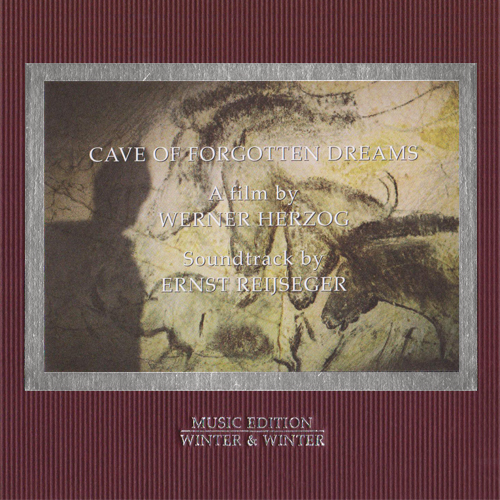
Werner Herzog's 2011 documentary Cave of Forgotten Dreams was rightfully released to near-universal critical acclaim. It's a lushly filmed portrait of the miraculously well-preserved cave paintings found in a French cave that was hermetically sealed millennia ago by a landslide, peppered with just enough of Herzog's typical eccentrics to lend the film flavor (including a perfumer who seeks out hidden caves in the countryside by smell). Somewhat lost in the mix was the amazing score for the movie, composed and in part performed by Dutch cellist Ernst Reijseger. Even for the score of a frequently silent movie, Reijseger's music is an integral part of the film's appeal. Throughout, he contrasts soaring choral parts with the resounding bass of his cello (specially created to support an extra low F string), creating precisely the ethereal sound necessary to accompany a trip that literally carries you back twenty-five to thirty-two thousand years in time. The wordless sound of human voices adds to the peculiar humanity of the individuals who occupied the cave - and they truly are individuals, from a hand-painter with a noticeably crooked pinkie to a child accompanied or followed into the cave by a wolf. Like the film itself, Reijseger's score was inexplicably passed over for an Academy Award nomination, but luckily an extensive soundtack - 73 minutes of music from a 90 minute film - is available here. Herzog also devoted the DVD's only special feature to the music, a 40 minute short film entitled Ode to the Dawn of Man that documents the recording of the soundtrack. You can see an excerpt below, featuring Reijseger and organist Harmen Fraanje performing "Shadow."
Past posts have dealt with Orson Welles, and they, like most stories about him, have concerned a decline in luck and resources that, unusually for Hollywood, was not precipitated or accompanied by a decline in talent. They've also noted that by a combination of curious disinterest and copyright disputes, many of his films have been released on home video only on VHS - or in some cases, never at all.
Chimes at Midnight (also called Falstaff) falls somewhere in between. The film has been sporadically released by different companies, often at a dearth of expense that (intentionally or not) mirrors the making of the film itself. "Official" DVD copies are available in Spain, and nowhere else. Unsurprisingly, the prints of Chimes that do circulate are often pretty shoddy, further complicating the already muddy original audio, recorded four and a half decades ago on substandard equipment. Yet the film is truly outstanding. Welles' enormous familiarity with Shakespeare allowed him to condense five Shakespeare plays - Henry IV Pts. 1 & 2, Henry V, Richard II, and The Merry Wives of Windsor - into a perfectly coherent narrative with minimal added dialogue. His enormous corpus make him an even better Falstaff than he was an Othello; his naturally resonant laugh rings true to the larger-than-life lovability of the character, and his formidable acting chops really bring out a usually underemphasized sadness that makes his hard breaks all the more touching. Direction is carried out with the flair you can almost come to take for granted in his work: deep focus as characters listen in on what would otherwise have been soliloquies; seemingly cavernous palatial sets that given the budget, in reality, couldn't have been; and a similarly miraculously choreographed battle scene, making the Battle of Shrewsbury out of a handful of extras and expertly contrasting the hilarious sight of a walrus-sized man crammed into a suit of armor with shots that suggest how awful the battle must really have been. Greed and inertia may see to it that Chimes at Midnight never sees the release it deserves, but thanks to the glory of the internet, at least can never be lost. Interested parties can download the film here.
[EDIT 8/30/2016: Against nearly impossible odds, the best case scenario has played out, and the Criterion Collection has been granted access to the best of all existing elements and allowed to remaster the film to their peerless standard. Chimes at Midnight was at long last released today for the first time on American home video (and the download link consequently disabled). It's a landmark day for film.]
[VHS of the Month covers movies only - or best - commercially available on VHS.]
The 1989 San Francisco 49ers were perhaps the finest team ever assembled. It's rightfully remembered as an offensive juggernaut, having featured the game's smartest, most clutch quarterback and greatest ever wide receiver, both in their prime; a runningback/fullback duo that combined for over 2400 yards and 8 TDs; and a backup quarterback who threw for 1000 yards and 8 TDs. People forget, though, that they also featured a dominant defense, featuring stars Ronnie Lott, Charles Haley, Keena Turner, and Bill Romanowski, and ranking 3rd overall in the NFL that year. It's true that the team's explosive offense helped it score an astonishing 126 points in 3 playoff games, but it was the defense alone that yielded 100 fewer points - that's 26 in total - to opponents in those same contests. And of course, the year culminated in an unprecedented laugher of a Super Bowl, a 55-10 thrashing of John Elway's hopelessly outmatched Denver Broncos. The 1989 Video Yearbook presents a game-by-game recap of the 14-2 regular season, and a more in-depth look back at the 3 playoff games (including the Super Bowl XXIV highlights advertised on the cover). Featuring the same glorious melodrama that has endeared NFL Films to sports fans for generations, the Yearbook has nonetheless fallen out of print, like all of the original team videos celebrating the Team of the 80s. However, it's an excellent testament to a squad whose unbelievable prowess was poetry in motion and is ideal to track down for any hardcore football fan, whether a member of the success-starved 49er Faithful or not.
[VHS of the Month covers movies only - or best - commercially available on VHS.]
Following Citizen Kane - a movie whose lavish acclaim has mostly been applied in retrospect, and whose controversy and unprofitability in 1941 destroyed its creator's career - Orson Welles directed 10 films whose production and distribution reflected Hollywood's distrust in him. The saddest casualty of this neglect was Kane's immediate successor, an adaptation of Booth Tarkington's familial saga The Magnificent Ambersons. As originally made, the film was nearly 2½ hours long; however, after a few unenthusiastic screenings it was slashed by studio executives at RKO while Welles was directing a wartime documentary in South America. The resulting film runs a full hour shorter and features a happier ending to the story than Welles had intended. To make matters worse, the excised footage was burned by RKO (possibly to prevent Welles from tampering), thus dashing any chance of future reconstruction.
Yet the film that remains, like so many of the under-financed projects Welles would undertake in his later career, is nonetheless a remarkable piece of work. The deep focus and dramatic camera technique which had been so shocking in Kane were, if anything, even more fluid and confident in Ambersons, and Welles' inimitable touch leaves its mark on every scene (even the end credits are memorable!). The film presents Tarkington's story - which chronicles the decline and collapse of a Southern family after years of unchallenged prominence in its community - in suitably sweeping fashion, and contrasts the decline of the Ambersons with the rise of the automobile in a particularly moving fashion. Ambersons also features great performances from Kane/Mercury Theater holdovers Joseph Cotten and Agnes Moorehead, the latter of whom in particular is every bit as impressive as the spinster Fanny as she was in her extremely brief role as Charlie Kane's mother. Like far too much of Welles' filmography, factors including estate disputes have kept Ambersons from ever having been released on DVD; in fact, the most recent VHS was a Turner Classic Movies release in 1996 that was essentially the version they'd show on TV (including the TCM intro segment). Even chopped up and hard-to-find, though, Ambersons is still simply one of the best movies made by perhaps the greatest of all American directors.
[UPDATE: Spurred exclusively by my recent mention of the film, Warner Brothers has announced a pending DVD release of Ambersons - unadorned, but remastered and on DVD nonetheless. Coincidentally, the release also coincides with the BluRay release of Citizen Kane and the 70th anniversary of that landmark. -5/20/11]
The soundtrack to John Hughes' classic Ferris Bueller's Day Off is nearly as iconic as the film itself: Yello's "Oh Yeah" as leitmotif; Ferris' ebullient "performances" of "Danke Schoen" and "Twist and Shout" during a massive parade through downtown Chicago; and Dream Academy's hypnotic instrumental cover of the Smith's "Please Please Please Let Me Get What I Want" helping Cameron mind meld with a pointillated child in Seurat's Sunday Afternoon on La Grande Jatte are but a few of the greatest musical moments in the movie. What's ironic is that perhaps the greatest motion picture soundtrack of the 1980s was never released, due to Hughes' concern that the eclectic mix of music offered in the movie wouldn't appeal to anyone as an album.
Prior to the advent of the internet, this meant that many of the songs were nearly impossible to find in any format. The only exception Hughes made was a limited release - 100,000 copies - of a 7" single featuring two songs from the movie that he owned the rights to, a "labor of love" that cost $30 apiece to produce. The A-side, "Beat City," is one of the more memorable songs of the movie, synced up to the high-octane escape in the 1961 Ferarri GT California. It pefectly captures the undescribable elation that comes with freedom from responsibilities, and it's easy to see why Hughes wanted it to be purchasable somewhere. The only other release of the song by the short-lived outfit Flowerpot Men came on a live EP called the Janice Long Session - it's unclear whether this is the same version heard in the movie, or whether the circulating track came from an otherwise forgotten studio session. The "soundtrack" version can be heard below and interested parties can download it here.
[VHS of the Month covers movies only - or best - commercially available on VHS.]
Woody Allen has always treated his work strangely by Hollywood standards: he usually refuses to talk about old films, and though his movies are often cited for their brilliant use of music, he generally hasn't sanctioned the release of soundtracks. Unsurprisingly, probably on his insistence, his classic movies have been sparsely issued on DVD. Most were simultaneously released in 3 volumes of box sets called "The Woody Allen Collection," each movie including a short booklet, a theatrical trailer, and French and Spanish subtitles. The transfer and packaging on the discs was uniformly fine, and it's probably a testament to the lavish treatment movies are accustomed to that his DVDs seem like a raw deal. That said, Annie Hall probably holds the unfortunate distinction of having the least supplemented DVD of any film to ever win Best Picture. (It's a shame, because even among Best Pictures it's a film of unusual quality.) Yet the Woody Allen movie that could most benefit from a lavish modern release has to be Zelig, an undeservedly overlooked masterwork in Allen's filmography.
The film, released in 1983, is a mockumentary centered around the phenomenon of Leonard Zelig, a man whose chameleon-like ability to physically and socially transform himself to blend in with any crowd in which he finds himself makes him an unlikely celebrity of the Roaring Twenties. In addition to being an extremely touching and funny movie, Zelig was a visual miracle, seamlessly integrating Zelig into archival photographic and video footage a decade before computer imagery made such a feat commonplace. Exploration of the technical achievements of a film like this is the very sort of thing special edition DVDs were designed for. Whether or not such a release will ever take place is hard to say. Until then, used VHS editions are not only absurdly cheap, but in many ways, even a more appropriate way to enjoy one of the last and greatest accomplishments to have been literally created on film.
[VHS of the Month covers movies only - or best - commercially available on VHS.]
The Verve: The Video 96-98 is what the title suggests: a compilation of various types of video of the band taken while the group was at its peak popularity. The content centers mostly around music from Urban Hymns, but earlier material is included as well. The first half of the program is based on studio recordings, including a Richard Ashcroft acoustic demo of "The Drugs Don't Work" and the music videos for each of the three hits from Urban Hymns. The latter half is comprised mostly of live footage unavailable elsewhere, including three powerhouse performances from an acclaimed show at Haigh Hall in Manchester. In all, the out-of-print tape offers a great insight into the life of the group at the time (minus the in-fighting and ecstasy consumption), and is a priceless piece of media from a band which has made very little available but the music. Besides, as the VHS tray in the box reminds you:
I was born in San Francisco and am currently a resident at the University of Maryland. This blog's title refers to my right eye, which lost function on April 19, 2004. Thanks for taking a look -- I hope you find something you like.