Showing posts with label Music. Show all posts

Tuesday, November 7, 2023

At the End of the Line

Years ago on a long-defunct website, I argued (like many others) that part of what's made the Beatles endure is the malleability of their myth. The band members were so easy to identify with, and their music worked so well, that you could read almost anything you wanted into them. In biographical fact, when Abbey Road was being mastered in 1969, "Her Majesty" was included at the end accidentally, when it was placed at the end of the reel and forgotten about after it couldn't be satisfactorily worked into the closing medley. It was discovered before release, and it was consciously kept in place as a joke. It wasn't placed there to invent the hidden album track, and it wasn't included as a knowingly self-deflating wink to the pristine career-ender Abbey Road would otherwise have been. But such was the mystique of the Beatles that if you wanted to believe either alternate history, you could -- Babe Ruth called his shot, George Washington felled the cherry tree, and the Beatles quietly informed a generation that it was OK to move on.

The Beatles reuniting for the Anthology project in 1994 owed much to timing. Some of the contributing factors were clear publicly. Animosity had faded (but not resolved) in the decades since the divorce and John Lennon's death; the teenagers who'd grown up with the band were now adults with nostalgia for their youth and dispensable income; George Harrison's work with Jeff Lynne had reinvigorated his career and provided the project with a suitable producer; and technology's advancement meant that a posthumous project was technically realistic for the first time. Also important, if less overtly clear, was a commercial need to revive the Beatles' brand in public consciousness, and the Anthology kicked off a second career for the band which has, in general, continued apace since. Like most Beatle projects from Sgt. Pepper on, the musicians might have enjoyed it more had it been more contained in scope. Instead, Anthology ultimately included an 11 hour TV series, a coffee table retrospective book, 3 archival double albums, and plans for 3 posthumous singles to open them. By most metrics, the first two singles were successes, charting well and receiving largely positive reviews. Work on the songs was complicated by the audio quality of the Lennon home demos they were based around, but "Free as a Bird" and "Real Love" were completed uneventfully, and are held in favorable (if somewhat middling) estimation by most contemporary Beatle fans.

Two other Lennon demos, "Now and Then" and "Grow Old with Me," were provided by Yoko Ono to the band as contenders for a third and final posthumous single. With the latter having already been released as-is a decade prior, focus turned to "Now and Then," though this ultimately proved brief. Identified issues included more severe versions of the technical problems already encountered on "Free as a Bird" and "Real Love," as well as a song sketch less realized in its demo form than the others had been. Cursory attempts at a backing track were made, including McCartney bass, Harrison guitar, and an automated drum track. Ultimately, the song was abandoned after likely an afternoon. In retrospect, this decision was pinned to dissatisfaction from George Harrison, certainly with the hissy, wobbly tape recording, but possibly also with the song itself. Perhaps McCartney was tired of pushing his bandmates to do things they'd just as gladly give up on, or was wary of pushing them away again; maybe he himself had reservations this time about the project, too, or was just ready to go home. Regardless of the rationale, Anthology 3 arrived to stores in October 1996 conspicuously missing a leadoff single, which in spite of multiple revisitations over the ensuing decades, threatened never to arrive.

The Peter Jackson Get Back project is being credited for jumpstarting the technical leaps necessary to bring "Now and Then" to fruition nearly 50 years later. However, the roots likely stretch back as far as 2006, with the LOVE remix album, and especially to the Live at the Hollywood Bowl rerelease in 2016. The latter represented a major sonic facelift, diminishing the intensity of that album's infamous crowd screams and refocusing the recording on the music in a manner which would previously have seemed impossible.  It can be tempting, then, to view 2023's "Now and Then" as an inevitability, a project which was bound to materialize as soon as it was possible to cinch the final remaining loop. Why wouldn't they?

On the other hand, though, these are the same Ringo and Paul who for the more than 20 years that they've been the surviving Beatles have, with few exceptions, consciously avoided collaboration. Even as the Beatles have gone all-in on revitalizations of their back catalog, Ringo and Paul have steered clear of even a Page and Plant-style tour, let alone second-iteration albums along the lines of Queen or the Who. With that in mind, then, why would they?

Listening to "Now and Then" as released this year makes it more or less impossible to appreciate the technical concerns that (at face value) held it up for so long. John Lennon's vocals sound at least as clear as they did on "Real Love," if not more so, with no hiss or whine to announce the performance's archival origins. Paul and Ringo's instrumental work sounds just about as good as more complete attempts they might have made in 1994 likely would have. There is little to distinguish George's 1994 guitarwork from the supplemental parts Paul recorded with an attempt to emulate his playing. This includes the solo, which has received criticism in some circles for its understatement, but plays as well as George's own (also unfairly maligned) brief solo on "All You Need Is Love." The string arrangement is perhaps somewhat less understated, but still tasteful, with Giles Martin continuing to prove a capable steward of the band's legacy.

None of that is to say that this is a conventional Beatles recording, though, not even to the extent that the other Anthology singles were. The limitations of the song structure are clear. "Real Love" was essentially finished as it was; "Free as a Bird" required "We Can Work It Out"-style buttressing to complete, but likewise, was otherwise more or less able to stand alone. "Now and Then" is essentially a refrain, a chorus, and two functionally identical verses with a wordless bridge inserted in between. This isn't inherently a problem, but limitations in text do entail more emphasis placed on subtext. What sets "Now and Then" apart from its colleagues most are the vocals, which place the audibly aged Paul (and to a lesser extent, Ringo) up alongside John, frozen as he sounded in 1977. In 1994, the surviving Beatles' vocal timbres had changed, but it was nowhere near so glaring then as it is now that the singers are no longer contemporaries. Once again, in biographical fact, the Beatles did not intentionally hold back "Now and Then," their most bittersweet and nostalgic posthumous single, to complete only once the voices of a 37-year-old John and an 80-year-old Paul were disparate-sounding enough to instantly amplify existing themes of longing and loss. Once again, though, it's hard to escape the notion that if you wanted to believe it, you could.

"Now and Then" is currently tracking in the direction of topping the charts in both the US and UK, propelled among other things by a marketing campaign emphasizing that this is, will be, has to be, the "last Beatles song." While it's difficult to conceive that the executors of the band will never again put out previously commercially unreleased music -- "Carnival of Light" is still in the ether, after all, and Peter Jackson was just talking about the hundreds of hours of Get Back recordings that never made it past bootlegs -- it does seem unlikely that archival Beatle material and contemporary recordings of surviving band members will ever be merged again in quite this way. And with that in mind, it's hard to imagine that this project, through roadblocks, time, and all, could have turned out any better than it did. Those who want to should be able to consider this the "final word" from the Beatles, and if you so choose, it's a touching and fitting note to go out on. Those who don't can stop looking either at the end of the core catalog, or at the (presumably many) reissues yet to come, or anywhere else in between. And once again, if you're inclined to read something into the Beatles, whatever evidence you may need is likely already waiting for you.

Tuesday, June 22, 2021

Animal Crossing: New Horizons OST Tracklist

Though Animal Crossing: New Horizons failed to win any major Game of the Year awards (in the US) after its bigger-than-expected release, it was the definitive game of 2020, providing a chance at social connection and a retreat to normalcy to gamers worldwide during the COVID-19 pandemic. The game features a wonderful, expansive soundtrack overseen by sound director and longtime Nintendo composer Kazumi Totaka. Though complete YouTube playlists of game music were available to stream within days of the game's release, an official soundtrack release didn't take place until an elaborate, Japanese-exclusive, 7-disc box set arrived in June 2021. Given the absence of an official American release (so far), there is no official English-language tracklist or album cover available online. The album cover to the right is a composite made from the existing Japanese box, with icons slightly juggled and the English-language logo superimposed. (Unedited images of the Japanese-language cover are available elsewhere.) Below is a translated tracklist for all 7 discs, including the 4 disc "BGM" set of background music and the 3 disc "Instrumental" set of K.K. Slider songs. With any luck, Nintendo will someday opt to officially release the soundtrack in the West, at least so that my translating effort can be graded for fidelity.  


Disc 1

  1. Opening Theme
  2. 12 am (Clear)
  3. 1 am (Clear)
  4. 2 am (Clear)
  5. 3 am (Clear)
  6. 4 am (Clear)
  7. 5 am (Clear)
  8. 6 am (Clear)
  9. 7 am (Clear)
  10. 8 am (Clear)
  11. 9 am (Clear)
  12. 10 am (Clear)
  13. 11 am (Clear)
  14. 12 pm (Clear)
  15. 1 pm (Clear)
  16. 2 pm (Clear)
  17. 3 pm (Clear)
  18. 4 pm (Clear)
  19. 5 pm (Clear)
  20. 6 pm (Clear)
  21. 7 pm (Clear)
  22. 8 pm (Clear)
  23. 9 pm (Clear)
  24. 10 pm (Clear)
  25. 11 pm (Clear)


Disc 2

  1. 12 am (Rain)
  2. 1 am (Rain)
  3. 2 am (Rain)
  4. 3 am (Rain)
  5. 4 am (Rain)
  6. 5 am (Rain)
  7. 6 am (Rain)
  8. 7 am (Rain)
  9. 8 am (Rain)
  10. 9 am (Rain)
  11. 10 am (Rain)
  12. 11 am (Rain)
  13. 12 pm (Rain)
  14. 1 pm (Rain)
  15. 2 pm (Rain)
  16. 3 pm (Rain)
  17. 4 pm (Rain)
  18. 5 pm (Rain)
  19. 6 pm (Rain)
  20. 7 pm (Rain)
  21. 8 pm (Rain)
  22. 9 pm (Rain)
  23. 10 pm (Rain)
  24. 11 pm (Rain)
  25. 12 am (Snow)
  26. 1 am (Snow)
  27. 2 am (Snow)
  28. 3 am (Snow)
  29. 4 am (Snow)
  30. 5 am (Snow)
  31. 6 am (Snow)
  32. 7 am (Snow)
  33. 8 am (Snow)
  34. 9 am (Snow)
  35. 10 am (Snow)
  36. 11 am (Snow)
  37. 12 pm (Snow)
  38. 1 pm (Snow)
  39. 2 pm (Snow)
  40. 3 pm (Snow)
  41. 4 pm (Snow)
  42. 5 pm (Snow)
  43. 6 pm (Snow)
  44. 7 pm (Snow)
  45. 8 pm (Snow)
  46. 9 pm (Snow)
  47. 10 pm (Snow)
  48. 11 pm (Snow)


Disc 3

  1. Resident Services (Tent)
  2. Resident Services
  3. Blathers' Tent
  4. Museum (Entrance)
  5. Museum (Fish Exhibit)
  6. Museum (Insect Exhibit)
  7. Museum (Fossil Exhibit)
  8. Museum (Art Exhibit)
  9. Airport Lobby (Speaker)
  10. Airport Lobby
  11. Able Sisters
  12. Nook's Cranny
  13. Nook's Cranny (Upgraded)
  14. Nook's Cranny (Closing)
  15. Jolly Redd's Treasure Trawler
  16. Dreaming
  17. Island Life Orientation 1
  18. Island Life Orientation 2
  19. Island Life Orientation 3
  20. Island Life Orientation 4 (Campfire Evening)
  21. Island Life Orientation 5 (Normal)
  22. Island Life Orientation 5 (Rain)
  23. Island Life Orientation 5 (Snow)
  24. Island Life Orientation 6 (Normal)
  25. Island Life Orientation 6 (Rain)
  26. Island Life Orientation 6 (Snow)
  27. Island Life Orientation 7 (Normal)
  28. Island Life Orientation 7 (Rain)
  29. Island Life Orientation 7 (Snow)
  30. Deserted Island Day (Normal)
  31. Deserted Island Day (Rain)
  32. Deserted Island Day (Snow)
  33. Deserted Island Night (Normal)
  34. Deserted Island Night (Rain)
  35. Deserted Island Night (Snow)


Disc 4

  1. Tournament (In Progress)
  2. Tournament (Participating)
  3. Easter
  4. Wedding Season (Reese and Cyrus)
  5. Wedding Season (Party)
  6. Fireworks Display
  7. Halloween
  8. Thanksgiving Day
  9. Thanksgiving Day (Cooking Start)
  10. Thanksgiving Day (Cooking Complete)
  11. Christmas (Snow)
  12. Christmas (Clear)
  13. New Year's Eve Countdown (11 pm)
  14. New Year's Eve Countdown (11:30 pm)
  15. New Year's Eve Countdown (11:50 pm)
  16. New Year's Eve Countdown (11:55 pm)
  17. Happy New Year
  18. New Year (12 am)
  19. New Year (2 am)
  20. New Year's Day
  21. Festivale
  22. Festivale Dance (Normal)
  23. Festivale Dance (Complete)
  24. Deserted Island Getaway Package Check-In Counter
  25. K.K. Slider Dream
  26. Island Broadcasting (Tom Nook)
  27. Island Broadcasting (Isabelle)
  28. Facility Completion Ceremony
  29. Travel (DAL Fanfare)
  30. Travel (In-Flight Broadcast)
  31. Travel (Waiting)
  32. Travel (Welcome)
  33. Travel (Seeing Off)
  34. ! Rescue Service
  35. Invite with Amiibo
  36. Chased by Wasps
  37. Stung by Wasps
  38. Stung by Scorpion/Tarantula
  39. Get Fanfare
  40. Complete Fanfare
  41. Radio Jingle (Morning 1)
  42. Radio Jingle (Morning 2)
  43. Radio Jingle (Morning 3)
  44. Radio Jingle (Morning 4)
  45. Radio Jingle (Morning 5)
  46. Radio Jingle (Morning 6)
  47. Radio Jingle (Afternoon 1)
  48. Radio Jingle (Afternoon 2)
  49. Radio Jingle (Afternoon 3)
  50. Radio Jingle (Afternoon 4)
  51. Radio Jingle (Afternoon 5)
  52. Radio Jingle (Afternoon 6)
  53. Radio Jingle (Evening 1)
  54. Radio Jingle (Evening 2)
  55. Radio Jingle (Evening 3)
  56. Radio Jingle (Evening 4)
  57. Radio Jingle (Evening 5)
  58. Radio Jingle (Evening 6)
  59. Radio Jingle (Easter)
  60. Radio Jingle (Halloween)
  61. Radio Jingle (Thanksgiving Day)
  62. Radio Jingle (Christmas)
  63. Radio Jingle (Countdown)
  64. Radio Jingle (Festivale)
  65. Opening Theme (Remote Performance Version)


Disc 5

  1. K.K. Cruisin
  2. Lucky K.K.
  3. Mountain Song
  4. Aloha K.K.
  5. Hypno K.K.
  6. Surfin' K.K.
  7. K.K. Stroll
  8. Two Days Ago
  9. Only Me
  10. Pondering
  11. K.K. Birthday
  12. Bubblegum K.K.
  13. K.K. Safari
  14. K.K. Western
  15. K.K. Lament
  16. K.K. Rally
  17. K.K. Marathon
  18. K.K. Calypso
  19. K.K. Country
  20. K.K. Groove
  21. Agent K.K.
  22. Soulful K.K.
  23. K.K. Salsa
  24. K.K. Samba
  25. K.K. Chorale
  26. K.K. Jazz
  27. K.K. Jongara
  28. K.K. Swing
  29. K.K. Ska
  30. Mr. K.K.
  31. K.K. Soul
  32. K.K. Song


Disc 6

  1. King K.K.
  2. K.K. Tango
  3. Imperial K.K.
  4. K.K. Dixie
  5. K.K. Disco
  6. K.K. Synth
  7. K.K. Étude
  8. K.K. Sonata
  9. K.K. Milonga
  10. Rockin' K.K.
  11. K.K. House
  12. K.K. Ballad
  13. Café K.K.
  14. K.K. Adventure
  15. K.K. Parade
  16. K.K. Rockabilly
  17. The K. Funk
  18. K.K. Fusion
  19. K.K. Flamenco
  20. K.K. Blues
  21. K.K. Bossa
  22. K.K. Moody
  23. K.K. March
  24. K.K. Oasis
  25. K.K. Aria
  26. K.K. Mambo
  27. K.K. Folk
  28. K.K. Metal
  29. K.K. Love Song
  30. K.K. Lullaby
  31. K.K. Reggae
  32. K.K. Rock


Disc 7

  1. K.K. Bazaar
  2. K.K. Waltz
  3. K.K. Steppe
  4. K.K. Dirge
  5. Farewell
  6. Comrade K.K.
  7. K.K. Mariachi
  8. I Love You
  9. K.K. Technopop
  10. K.K. Island
  11. Animal City
  12. Drivin'
  13. K.K. D&B
  14. K.K. Casbah
  15. Neapolitan
  16. To the Edge
  17. Steep Hill
  18. K.K. Gumbo
  19. K.K. Faire
  20. Spring Blossoms
  21. Marine Song 2001
  22. Stale Cupcakes
  23. K.K. Condor
  24. Wandering
  25. My Place
  26. Space K.K.
  27. Welcome Horizons
  28. Forest Life
  29. DJ K.K.
  30. Go K.K. Rider
  31. K.K. Ragtime

Sunday, March 4, 2018

My Top 10 Albums of the 80s: (3) The Stone Roses - The Stone Roses

[This is the eighth in a series of ten posts. The list'll be revealed as entries are written.]

The Stone Roses arrived on the international scene fully formed with their eponymous 1989 debut, a vast and outrageously confident album befitting a band that had already been touring for nearly 6 years. Through a complex series of contract disputes and interpersonal conflicts, the band would ultimately come to stand as the forebears not only of the figureheads of a second British Invasion, but also of those groups’ tendency to fizzle out just as they reached their peak. The thin drums and trebly basslines of The Stone Roses anchor in 1989 music that borrows liberally from very nearly everything preceding it – including, almost as if to make a point, Renaissance balladry on “Elizabeth My Dear.” The guitar-dominated proceedings certainly owe a great deal to The Smiths, an influence which may also have unlocked such unabashedly pretty moments as the chiming “Waterfall.” Much has been made of the absence of overt electronica on The Stone Roses, given band’s place within the drug- and dance-centric Madchester scene. If it isn’t quite a party album, though, it’s a relentlessly kinetic one thanks to its powerful rhythm section and swaggering frontman. The latter does ultimately steal the show, singing “I Wanna Be Adored” and “I Am the Resurrection” with absolute conviction, and either no awareness of or no concern for the disconnect. The effect is something of a magic trick, lending plausibility to The Stone Roses as a miraculous flash in the pan arriving at the precipice of the 1980s to encapsulate the decade, rather than the slow brew it really was. It was perfectly appropriate that the band’s next act was effectively to disappear.

Friday, November 24, 2017

My Top 10 Albums of the 80s: (4) Paul's Boutique - Beastie Boys

[This is the seventh in a series of ten posts. The list'll be revealed as entries are written.]

Following an abortive career in punk, the Beastie Boys made an overnight leap to stardom with Licensed to Ill, a tone poem of gleeful idiocy that quickly became the best-selling album in hip-hop. Headed by producer Rick Rubin, and armed with an even more finely tuned version of the rock formula already worked to near-perfection on Run-D.M.C.'s Raising Hell, Licensed to Ill proved an enduring surprise, thanks to the sharpness with which the Beasties skewered the frat culture they had, from the outset, (mostly) transcended. Even those who appreciated the wink behind "(You Gotta) Fight for Your Right (To Party!)," though, could never have anticipated Paul's Boutique, which presented hip-hop as a legitimate mode of expression on a scale never before attempted. It honed the wit of the debut and was saturated with a pop culture referentiality presaging nearly 3 decades of post-Tarantino media to come. It retained the signature, labored rhymes that lent the MCs their peculiar charm, but also provided the maturing rappers with genuinely impressive technical showcases. Finally, it lay upon an unparalleled bed of samples assembled by the Dust Brothers; befitting a medium that lives and dies on the spoken word, it not only surrounds and invigorates the lyrics, but complements and occasionally even answers them. Smarter than Licensed to Ill, better produced than Raising Hell, and more consistent than Straight Outta Compton, Paul's Boutique survived a vigorous commercial flop to find acclaim throughout the world of rap as perhaps the first album fully to live up to the genre’s potential. Of course, subsequent to the album’s release, both momentous litigation and a growing awareness on the part of record labels of the potential profitability of sample-based music would ensure that no album could ever be made to sound quite like Paul's Boutique again. Few other hip-hop albums have ever sounded so literate; far fewer have ever been as immaculately produced; and possibly none to date have been so resoundingly successful in both.

Saturday, October 7, 2017

Peak Ringo

The ubiquity and adulation of the Beatles makes it difficult to cover their songs: one tends to mimic the arrangements and fail to recapture the magic, or else stray too far and fall flat (except in the presence of transcendent talent). Likewise, while many artists have revisited old songs late in their career, precious few rerecordings have offered value beyond their inherent novelty. A number of rock's legends are by now far enough into their 70s to have had one, or even a few, releases that have addressed aging with grace, and even elegance. With Ringo Starr recently releasing Give More Love, appended with 4 rerecorded back catalog tracks, it was easy to wonder whether he could follow his contemporaries' lead and produce a late-career curveball.

Ringo's discography features only one overt foray into introspection, which followed on the heels of Paul McCartney's nostalgic Memory Almost Full and borrowed from it liberally, thematically and musically. Almost by definition, it was a kindhearted look at a remarkable early career that offered little insight into its author. There's no doubting the song's sincerity, but it sounds like Ringo attempting a reflective Paul McCartney song, which in its heart it probably is. By all accounts, in Give More Love Ringo has produced his eighth-or-so consecutive amiable and largely indistinguishable studio offering. It was perfectly unsurprising for Ringo to revisit the well for 4 bonus tracks to please old fans on a nineteenth solo album. It is at least a bit surprising that one rerecording offers something different from the original.

"Don't Pass Me By" was written in 1962 and released on The Beatles 6 years later. It's a typical White Album recording, sharply arranged and more than a little frantic (especially in its sped-up mono incarnation). It's a simple song that perfectly suited a 1968 Ringo, earnest and immersed in the lovable sad sack persona he'd cultivated in the band's movies. While it was written as a raucous country and western number, it's been retrofitted into a gentle bluegrass arrangement, in keeping with 5 decades of changes to the genre and years lived by the performer. Where the other 2017 rerecordings are happy to retrace the originals' steps, "Don't Pass Me By" was shrewdly allowed to amble, affording Ringo an opportunity to sound not only laid back, but quietly dignified.


Ringo presumably never will release a Memory Almost Full: it's not just that his musical stylings aren't suited to a statement album, but that statements exceeding "Peace & Love" in complexity are not part of his personality. When he ends his own 55 year old song with a reprise of "Octopus's Garden," he sounds at 77 like a man at peace with himself and still content to sit in quiet safety with his friends. We should all be so lucky.

Wednesday, July 26, 2017

My Top 10 Albums of the 80s: (5) Graceland - Paul Simon

[This is the sixth in a series of ten posts. The list'll be revealed as entries are written.]

Paul Simon followed up Hearts and Bones – the biggest flop of his career - with Graceland, which catapulted his star beyond even the heights he experienced as Art Garfunkel's secret mustache. The album was recorded in apartheid-era South Africa in an act of apolitical musical outreach; it nonetheless drew the ire of the UN and ANC, each of whom condemned Simon's breach of the prevailing cultural embargo. The album's mythology is subsumed by its political context, to which the virtual entirety of the official making-of documentary Under African Skies is devoted. As usual, this unfortunately glosses over what made the album truly special to begin with. Graceland was not only the original mainstream world fusion album, it remains unsurpassed 3 decades later in pure vitality. Paul Simon emerged from his messy divorce from Carrie Fisher with a remarkable, incisive set of lyrics, delivered in some of the best performances of his career. The music, meanwhile, was carefully edited down (mostly) from studio jams directed by Simon himself. These infuse the proceedings with a palpable feeling of discovery: that of an already accomplished artist being exposed, in real time, to an entirely fresh musical vocabulary. And indeed, many of the album's most magical moments are borne of instruments alone, from the storied accordion-and-drums opening bars to the ethereal coda of "Under African Skies." (It helps that he found musicians to perform with so uniformly outstanding as Ladysmith Black Mambazo and bassist Bakithi Kumalo.) Graceland remains touching at such a remove from the collapse of apartheid because it's simultaneously a man's lonely journey through personal turmoil and his being opened up to new, reinvigorating worlds of experience. It remains not only the pinnacle of Paul Simon's career, but an enduring testament to our shared humanity.

Saturday, May 6, 2017

"Kind of Blue" and Album Sequencing

Previous posts have detailed my interest in musical formats and the effort put into programming music to the structures of those media. In this, the LP reigned supreme, as both the longest-lived format of aural media and – having a flip side – the one most obviously allowing for divvying up music thematically. Famous examples include the symmetrical halves of Led Zeppelin IV and the asymmetrical halves of What's Going On; the Abbey Road medley and the Purple Rain live suite. An example less frequently discussed is an album I've often referenced, yet somehow never written about in detail.

Kind of Blue was released in 1959 to warm (if less than overwhelming) critical and commercial success. It has sold continuously since then and become universally acclaimed. At least 260 variants of Kind of Blue have been released worldwide, yet bizarrely few have done full justice to the album's potential. All releases until 1992 were mastered with Side A at the incorrect speed and pitch, while most releases since 1997 have tacked the excellent alternate take of "Flamenco Sketches" immediately after the original, creating substantial redundancy in a fairly short album. Thankfully, Kind of Blue is now widely available as a 5-track album with all songs playing at their intended speed. The results are sublime, substantiating Jimmy Cobb's famous assertion that the album "must have been made in heaven."

In earthly terms, Kind of Blue was made at Columbia's 30th Street Studio over two recording dates, on March 2 and April 22, 1959. Side A includes – in order – the album's most famous, most catchy, and most controversial tracks. This at first would not appear to leave much for the flip side to lay claim to. What's more, the tracks were arranged by recording date rather than theme, with Side A recorded on March 2, and Side B (mostly) on April 22; little effort was put into sequencing, as was the industry standard in the late 50s. Yet despite being less famous pieces dropped on the end of what was recorded as just another album, "All Blues" and "Flamenco Sketches" form the centerpiece of the medium's most indispensable document.

"All Blues" is the longest track on Kind of Blue, and was by all accounts one of the most difficult to record, with a pulsating foundation that called for more than 11 minutes of precision from the rhythm section. Solos lead off with Miles Davis, followed by Cannonball Adderley, John Coltrane, and Bill Evans. Each is a master class in effortless playing, with Adderley in particular constraining his boundless energy for his coolest moment on the record. Davis, as usual, delivers an impeccable solo, but steals the show with the coda, returning after an already perfect 11 minutes for a subtle final brushstroke. During and after his lifetime, Miles Davis was set apart from other musicians by a magic that was difficult to pinpont: something that extended beyond his musical sensibilities, his understated technical prowess, or even his legendary cool. This master's touch allowed Davis to consistently assemble the greatest bands in jazz, and elevate even the most familiar standards to new heights. It is nowhere in greater evidence on record than as he guides "All Blues" to a close.

"Flamenco Sketches" sustains its predecessor's atmosphere while dropping its insistent pulse. It epitomizes not only the sound of Kind of Blue, but the mood synonymous with its name. Solos are by Davis, Coltrane, Adderley, Evans, and Davis again. This time, the spotlight belongs to Coltrane, who delivers likely the most pensive solo of his storied career, and among the most beautiful. By the time Evans and Davis have completed their solos, the tune is floating on air, and the album dissolves into the ether off of Jimmy Cobb's drum kit.


Serendipity (or divine intervention) is frequently credited in the Kind of Blue narrative. Admittedly, the circumstances were near ideal: Davis' first great quintet, including his all-time most famous collaborator, playing in jazz's greatest recording studio with Bill Evans as a special guest. Yet it was only with protracted effort that Miles Davis assembled that quintet, and it was specifically for his modal album that he included Evans – a pianist whose impressionist tendencies informed not only the band's ability to tackle the music, but even the liner notes. Fortune's greatest contribution to the finished product may ultimately have been the track order. Within a decade of the album's release, Kind of Blue was on its way to canonization, and consciously arranging LPs had become a major focus in jazz and beyond. Intentionally or otherwise, Kind of Blue's sequencing set an example for every album to follow.

Sunday, January 29, 2017

Out of Print Gems: David Hentschel - "Startling Music"

Ringo Starr made his name as the odd Beatle out, pushing through only 2¼ songwriting credits on Beatle albums and playing the lovable loser in all four of the band's non-documentary films. Yet it was Ringo who burst out of the gates to commercial success following the band's dissolution. Armed with a bevy of songs co-written with (or ghostwritten by) his former bandmates – all of whom he alone remained more or less friends with – Ringo routinely charted both albums and singles in the US and UK Top 10 through the end of 1974. In 1975, at the height of his commercial success, Starr followed George Harrison's lead and founded his own record label, Ring O'Records. The label persisted through 1978 but suffered from distribution problems throughout, with releases being handled by Capitol, Polydor, or no one at all. Coupled with Starr's worsening substance abuse and declining commercial prospects, these logistical hurdles meant that only 11 artists would ever record for Ring O'Records, producing a total of 7 LPs and 17 singles.

The label's first release, an LP by British recording engineer David Hentschel, stands as the most meta release in the notably self-referential Beatle universe: a complete instrumental cover of Ringo's most successful album (Ringo), released as Ring O'Records 2320 101 under the punny title Startling Music. Recorded after (but released before) Paul McCartney's instrumental Thrillington, Startling Music is otherwise a unique entry in the extended Beatle discography. Hentschel himself, in addition to having engineered such albums as All Things Must Pass, was a talented synth artist with playing credits including the overture to "Funeral for a Friend" and parts on five Genesis albums. While his friendship with Harrison led him to Starr's record label, his other connections within the industry enabled guest drumming from future bandmate Phil Collins and other instrumental work by session insider Ronnie Caryl.

Startling Music is described in the album credits as an "interpretation of the album Ringo," which may be understatement. Where Thrillington was a fairly straight ahead, semi-classical cover, Startling Music is in fits jazzy and funky, but first and foremost, a prog album worthy of its Genesis pedigree. Even the most faithful cover – Ringo's signature solo hit, "Photograph" – is preceded by a Baroque toccata lasting 3:20. Collins is credited with drums/percussion on 6 of the 11 tracks and is tight throughout, while Caryl's guitarwork amplifies the already bombastic arrangements to impressive heights. Ringo himself contributed little to the album and is only credited with finger snaps on "Step Lightly." Nonetheless, thanks largely to the strong melodies inherited from him, Startling Music holds up nicely, even for those unfamiliar with the original album.

Following the collapse of Ring O'Records, the entire catalog fell out of print, dragging Startling Music down with it. Today it stands (along with the first four Splinter albums) as one of the rare projects tied directly to a Beatle to be commercially unavailable. Like Splinter's rich discography, Startling Music deserves and would benefit from a remaster and rerelease; until then, you can download it here.

Friday, September 9, 2016

The Beatles - "Live at the Hollywood Bowl"

The Beatles at the Hollywood Bowl was always the black sheep of the band's core catalog, recorded live at an outdoor stadium at a time when recording equipment struggled to capture live music and pop artists - with one exception - didn't play stadiums. Reviews focused on the audience's continuous wall of screams, melodramatically describing the sound quality as bordering on unlistenable. In reality the Beatles' only sanctioned live album was an invaluable addition to the catalog, proudly (if roughly) showing off the tight, confident rock and roll band that John Lennon, even after the breakup, couldn't resist bragging about.

Live at the Hollywood Bowl is the absolute realization of the material's potential [1]. Sourced from different tapes than the 1977 LP, these digitally manipulated recordings miraculously present a sound that wasn't available to anyone at the Hollywood Bowl, including - or especially - the Beatles. The spacing between instruments, vocals, and crowd noise is comparable to a modern-day equivalent. Giles Martin, in his first solo venture as the Beatles' producer, accomplished what his late father's 1977 liner notes lament having been technically impossible at the time. What has been released in that worthy album's place is the definitive aural document of Beatlemania, preserving the impact of the screams with, at last, less input from the screams themselves.

Friday, May 13, 2016

My Top 10 Albums of the 80s: (6) The Joshua Tree - U2

[This is the fifth in a series of ten posts. The list'll be revealed as entries are written.]

U2 have always been searchers. Reviews of the band's albums, positive and negative alike, tend to touch on the sense of yearning that pervades the music. It's likely this very restlessness that lends the group its defining peculiarity: no band has ever put out so many great albums without producing any back-to-back. The Joshua Tree is the quintessential U2 album, not because it's definitively their best - Achtung Baby is at least as good - but because it features the band distilling this essence most successfully. The Unforgettable Fire sessions had expanded U2's palate, but most of the resulting music suffered from a lack of structure. Rattle and Hum, meanwhile, featured a bombast that lands on the album's anthemic highlights, but otherwise comes off as obnoxious. The Joshua Tree sharpens the atmospherics of its predecessor while withholding on self-indulgence just enough to almost never become unctuous [1]. Each band member gets a showcase: Bono sings to rafters on "Red Hill Mining Town," Adam Clayton's groove sets the album in motion on "Where the Streets Have No Name," and Larry Mullen Jr.'s thunderous drumming is the high point of "Bullet the Blue Sky." The Edge, meanwhile, dominates The Joshua Tree. The shimmering arpeggios of "Where the Streets Have No Name" were expressly designed to be the ultimate U2 riff, and the claim has stood the test of eight subsequent albums. He almost single-handedly provides the songs with their atmospheres, summoning dread on "Exit," rapture on "Trip Through Your Wires," and (naturally) yearning on "With or Without You" - a song prudently chosen as the lead single, and one that ultimately couldn't help but become the band's signature composition. It was perfectly in character for Bono to announce "I Still Haven't Found What I'm Looking For," but The Joshua Tree represents perhaps the only time that U2 ever did just that. Fortunately for everyone else, it wasn't long before they felt compelled to return once more to the drawing board.

Thursday, April 28, 2016

When the Daisy, At Long Last, Opens Her Eyes

A previous post detailed my search for "When the Daisy Opens Her Eyes," an obscure recording by the once-famous violinist Albert Sandler used in the delightful 1973 documentary Metro-Land. Since November 2014, I had been regularly checking eBay for the record in question, and occasionally searching for more clues elsewhere on the internet. On March 10, I came across the website of the Centre for the History and Analysis of Recorded Music (CHARM), once operated by the UK's Arts and Humanities Research Council [1]. Their database included listings for several Albert Sandler recordings that had eluded me, including one disc (Columbia DX 961) comprising a medley of tunes by the composer of "Daisy," Haydn Wood. It was an encouraging discovery: though it fell short of naming the tune I was looking for, it was my first ever indication of which disc to chase. Soon after, I found an advertisement for the record in the Singaporean newspaper The Straits Times, published about 8 months after the recording session. So the record existed - it would just be a matter of finding it.

Five weeks of dead ends later, I received an email from a UK record dealer who had found a friend willing to part with his copy of "Selection of Haydn Wood's Songs." I still had no confirmation that this disc included the tune. However, having identified 136 Albert Sandler 78s that did not contain "When the Daisy Opens Her Eyes," I felt assured my time had come and made the purchase. Thankfully, I was right: Sandler included "Daisy" in his Haydn Wood medley, closing the circle on my Search for Metro-Land. The record's details are as follows:


Albert Sandler - Selection of Haydn Wood's Songs (Columbia DX 961)

Side 1 (Matrix CAX-8713-1)
Selection of Haydn Wood's Songs - Part 1: Fleurette, I Shall Never Forget/Silver Clouds/It Is Only a Tiny Garden/Love's Garden of Roses

Side 2 (Matrix CAX-8714-2)
Selection of Haydn Wood's Songs - Part 2: When the Daisy Opens Her Eyes/I Love Your Eyes of Grey/Roses of Picardy

Both selections recorded January 21, 1940. Columbia DX 961 was released in March 1940 and deleted from the catalog in March 1949.


Download by clicking the arrow button beneath the Soundcloud logo.

* * *

Finding the record suggested answers to a number of questions. The dealer addressed the disc's scarcity, reasonably surmising that compositions by Wood (whose most popular song was published in 1916) would have viewed as hopelessly old-fashioned by 1940 and sold very few copies. Furthermore, the use of "Daisy" as merely part of a subtitle explained why I had found so little information on the song. For one thing, Albert Sandler's records had never been explicitly linked to the "Daisy" title on the internet: the internet ostensibly contains 3 prior references [2] to the Albert Sandler record "Selection of Haydn Wood's Songs," none of which list the subtitle. For another, even in general, "Daisy" is more often referenced as a part of Haydn Wood medleys than it is standing alone. One such fascinating artifact – part of the Australian Library of Congress' digital holdings – is a copy of sheet music bearing the same title as my record, copyrighted 1920. In keeping with "Daisy's" obscurity (apparently even at the time), it is not advertised on the front cover, but is included on page 10. It would seem likely that this arrangement of Wood's music actually served as the basis for Sandler's: though 6 of the sheet music's 13 songs were excised (almost certainly for time [3]), the remaining 7 are all found on the record, in order. At least one bit of evidence suggests the medley, truncated or otherwise, remained part of his repertoire after recording it: he performed it as the last program of the day for BBC Radio at 11:30pm on February 28, 1943.

* * *

My quest for "When the Daisy Opens Her Eyes" has been the most obscure pursuit of a life already full of them. The year and a half between first seeing Metro-Land and completing the search for "Daisy" included the hardest 18 months of medical school and multiple other unforeseen challenges - sporadically interspersed with new information on a man I was unlikely to ever have heard about. It's been a pleasure to discover the gems populating his enormous discography. In this transitional period, it's also been touching to uncover the details of a life that it's felt time is on the verge of passing by. I decided to use what I've been able cobble together as the basis of a short biodiscography, which I've published online here. I hope it'll serve in a modest way to preserve his memory, and provide some interest to anyone else that should stumble upon Albert Sandler as haphazardly as I did.

Thursday, April 21, 2016

Prince, 1958-2016


It was September or October 2006, about a month into my first year at Berkeley, when I saw a new copy of Purple Rain for $5.99 in the discount bin at Rasputin Music. At that point, I knew Prince as a symbol (literally), a revered musical icon, and a Chapelle's Show character, but had never actually listened to his music. I had gotten off to a rocky start to college, and my growing music collection played a substantial role in helping me through. I dug into every corner of the Beatles' back catalog; I continued to wear out the copy of The Eraser I'd bought the previous summer; and after only one or two months I had already spun St. Elsewhere more times than I could count. As I bought music, I'd always intended to listen to Prince, and this particular afternoon seemed as good a time as any.

Sometime towards the end of college – by which time I'd acquired most of the rest of Prince's discography and bought Purple Rain and its otherworldly accompanying poster on LP – I decided to average out that $5.99 over the number of plays or hours I got out of that tinny, mid-80s pressing CD. Though the index card bearing my arithmetic has long since disappeared, by whichever metric I used we were talking about fractions of fractions of a cent per unit. Among the storied peaks of the many discographies I acquainted myself with at the outset of college, Purple Rain resonated with confident, inexhaustible vitality. Today, it's my pick for the best album of the 80s, and certainly one of my 10 favorites ever made – yet it's not without competitors for the title of best album in his catalog.

Prince passed away this morning. In the sense that his health in some way necessitated an emergency plane landing last week, it's not surprising, even for someone as young as 57. And yet the idea remains a shock – perhaps because his transcendent otherness was so immaculately cultivated that it suggested he might, in fact, actually be impervious to such Earthly concerns as death. From his star-making turn dressed in a purple jumpsuit atop a motorcycle, Prince somehow grew more eccentric as he aged, including such highlights as waging war on the internet and fully embracing his extramusical celebrity. Even as he receded from the experimental forefront of popular music, he remained one of its few truly fascinating figures. He announced his memoirs a month ago, and for the first time in my adulthood (with one obvious exception), I remember being genuinely curious to read a musician's full take on their own life. In every aspect of his person, he was one of a kind, and the world is less rich for having lost him.

Thursday, January 14, 2016

Astral Weeks - Van Morrison

Previous posts have outlined my fondness for remastered albums, and the way that a properly executed remastered release can contribute to newfound appreciation for the music it comprises. Entering 2015, my once daunting list of hoped-for remasters had dwindled to a precious few, with Prince and Van Morrison settling as vaguely surprising bedfellows atop the pile. Yet as far removed from one another as they - by nearly any metric - would seem to be, both Prince and Morrison share a history of aversion towards acknowledging past glories, fear of the future, and animosity towards record labels (in both cases, oddly, the reputedly artist-friendly Warner Bros.)  that made them ideal candidates to resist the long-overdue revisiting of their rich and expansive back catalogs. In February 2015, after years of rumors, it was finally confirmed that an expanded, anniversary edition of Purple Rain would be released before the end of the year. Meanwhile, as special editions of Moondance and other Morrison classics were announced and released, Astral Weeks - his most universally acclaimed album - remained uniquely (and bizarrely) untouched. So naturally, in late October, 2015, it was a newly burnished Astral Weeks that was unceremoniously dropped onto the market, while Purple Rain remained trapped in late-80s CD pressing purgatory with no end in sight.

Astral Weeks is a special album, one for which, by now, musical critics have reserved the most superlative of their superlatives for decades. And indeed, there's no good way to escape that trap: Astral Weeks is genuinely unique. It's unprecedented in popular music, untouched by the countless imitators spawned in its wake, and inexplicably, totally different from any other studio album produced by an artist who's recorded 35 of them. Morrison sings of love, death, and rebirth as though he was experiencing all three simultaneously, in studio. The jazzy arrangements have the same air as all the greatest albums in the medium from which they derive: so perfectly conceived and executed as to feel more like a happy accident than a master plan. The effect is like a Monet landscape, vibrant and all-encompassing precisely by way of its vagueness. The music evokes the quiet voices that ramble unobtrusively beneath the everyday noise in your head; it sounds like taking a walk with the moon shining just so, and has a way of bringing clarity and calm into any environment. This serenity is responsible for the magic trick Astral Weeks pulls off anew with every listen: making it seem as though Van Morrison - armed with his guitar, his voice, and newfound release from an insufferable contract with Bang Records - waltzed into Century Sound Studios and created the entire album in a sitting, unpremeditated.

To its credit, Warner Bros. payed off the interminable wait for an Astral Weeks update with a perfectly executed remastered album: pristine sound, nice liner notes, and enough bonus material to provide context without watering down the original contents. A languid early take of "Madame George" leans heavily on vibraphones; "Ballerina" stretches a full minute beyond its 7 minute final runtime. The new edition also reveals Astral Weeks - like almost every masterpiece - to have been made successful every bit as much by careful deliberation as by the feeling of spontaneity for which it's become famous. The first take of "Beside You" finds Morrison singing with a hesitancy compared to the final version, almost as though not yet fully tapped in to his own composition. "Slim Slow Slider," meanwhile, appears in an extended version revealing the sudden ending of the original album to have been an prudent edit by producer Lewis Merenstein. Tampering with the impression that Van Morrison appeared in studio in a trance and banged out all 8 tracks in perfect succession may not be to all tastes, but the survival of this effect through editing may make the accomplishment more impressive. One would have to imagine a suitable set of hands could similarly augment the already exalted legacy of Purple Rain; whether such a set of hands exist, unfortunately, only time can tell.

Saturday, June 20, 2015

In Search of Metro-Land

In November, my girlfriend introduced me to Metro-Land, a 1973 BBC documentary she'd watched two years prior in class while studying abroad in London. The film was written and narrated by John Betjeman, a onetime Poet Laureate of the UK and leading enthusiast of British railroads. It's a wonderful film populated by fascinating characters, and blessed with a unique and diverse soundtrack ostensibly curated by the author. The film has never been released in America, and is available only via Region 2 DVD or torrent; the soundtrack has never been released anywhere, and the quest to identify and acquire the music heard during the film served as a rare diversion while studying for Boards [1].

Music begins Metro-Land at center stage: the film begins with a sped-up montage documenting the length of a line on a Metropolitan Railway train starring the frantic music used to score it.


The tune is a rendition of Scott Joplin's standard "Tiger Rag," as performed by The Temperance Seven, who gained short-lived fame during the traditional jazz craze that swept England in the years immediately preceding the rise of The Beatles. To up the frantic factor, a 33⅓ rpm record was played at 45 rpm; it starts the show with a bang, and listening to the unaltered recording (below) shows it to have been an astute decision.


"Tiger Rag," along with other music used throughout Metro-Land, is identified in the screenplay included in the 1976 compendium The Best of Betjeman. (The entire book is a worthwhile selection of his poetry and prose; the third section comprises the script and is available for download as a PDF here.) In all, 14 recordings were selected for use in Metro-Land, outlined below. There are also four featured diegetic tracks: one choir performance of the Harrow School Song ("Forty Years On") and an organ medley played by Len Rawle in one of the film's most memorable sequences.


Of the 14 selections not performed onscreen, 10 or 11 [2] are directly identified in The Best of Betjeman. Five of these were released together in 2015 by Cherry Red Records as part of a fascinating collection. The compilation opens with the entirety of the Temperance Seven's first album, which itself began with "Tiger Rag"; the other tracks from Metro-Land included in the compilation are "Build a Little Home" by Roy Fox and His Band (recorded in 1934); "Masculine Women and Feminine Men" by The Savoy Havana Band (1926); "The Sunny Side of the Street" by Jack Hylton and His Orchestra (1930); and "Golfing Love" by Melville Gideon (1923).

Three others mentioned by name in the book are easily found for purchase today. The Osmonds' "Down by the Lazy River" and Bread's "Everything I Own" were both legitimate hits in 1972. The third song, also released in 1972, was "Neasden!" by William Rushton, a comedy record celebrating the dubious attractions of the titular, run-down-looking London suburb. It was originally released on Spark Records by the satire magazine Private Eye and has since found its way onto compilation albums. For its inclusion in Metro-Land, "Neasden!" was specially remixed from the original master tapes to highlight the lyrics, which producers felt had been "slightly overwhelmed" by the "rambunctious backing by 'The Ron Watford Sound'."

Four of the remaining six tracks are classical compositions. Two are directly named in The Best of Betjeman: "Civic Fanfare" by Edward Elgar and "Solemn Melody" by Walford Davies. An orchestral crescendo appears in the film and is identified in the script as "‘The Witch of Endor,’ ‘Le Roi David’ ‒ Honegger." The sequence is found in the twelfth movement of Arthur Honegger's Le roi David suite, entitled "Beschwörung der Hexe von Endor." The final classical piece was described in the script as "‘Double Concerti’ ‒ Handel." With the help of a stranger on Reddit, it's been identified as the first movement in Handel's Concerto a due cori No. 2. In all four cases, it's proved predictably difficult to identify the precise recording used in the film.

A similar challenge was presented by one of the remaining two pieces, identified in the script only as "‘Tit Willow’ ‒ Gilbert and Sullivan." Wikipedia revealed the song to be the 3rd-to-last number in The Mikado, which has been recorded innumerable times in a near-equal number of places. Luckily, an unusual arrangement was chosen for use in the film - entirely instrumental, including the usually-sung vocal line. A quick(ish) survey of the available recordings of "Tit Willow" on Spotify allowed me to positively identify the recording selected for use by Betjeman as the version performed by the Cyril Ornadel Orchestra. Few-to-no details on the recording seem to be available on the internet beyond the title and artist.

The final recording used in the film is identified in the script as "‘When the Daisy Opens her Eyes’ ‒ Albert Sandler." Not much else of the song exists - anywhere. "When the Daisy Opens her Eyes" was apparently composed by Haydn Wood, and trace references to the song appear on Google in prewar archive documents including copyright catalogs and social newsletters. Effectively all online references to the Sandler recording, however, are from copies of Metro-Land's Wikipedia article, citing the song's inclusion in the aforementioned script.

Not much exists on Sandler himself, either. A bare-bones life story was distributed in the 40s on the reverse of a trading card packaged with Wills's Cigarettes (right), and as time has elapsed, little has been added. By far his most extensive online biography is a 3 paragraph write-up by AllMusic's Bruce Eder, which aptly begins, "One would never know it from the neglect heaped on him since World War II, but violinist Albert Sandler was one of the more popular orchestra leaders in England during the period between the two world wars, and a leading name in the field of light classical music." Per Eder, Sandler was born in 1906 and died in 1948, and at his 1940s peak was a popular bandleader whose orchestra often appeared on BBC radio. For Sandler, "When the Daisy Opens Her Eyes" may have been an occasional setpiece, or perhaps even a staple as he led his bands through performance after performance in hotel ballrooms first in Eastbourne, and later in London. For me, it has become a White Whale.

Given that Metro-Land was released 25 years after Sandler's death, I can think of three possibilities for "When the Daisy Opens Her Eyes." First, The Best of Betjeman may have simply mistaken the title or artist of the song [3] (though I hope not). Second, the recording may have been made exclusively for radio broadcast. This would explain how hard it's been to find, and it's conceivable given that both Metro-Land and any radio performance of the song would have been made under the aegis of BBC. However, one of the few other references to both Albert Sandler and "When the Daisy Opens Her Eyes" to be found on the internet is from a 1950 radio guide to a now-repurposed Melbourne radio station [4], which was never affiliated with BBC and is therefore unlikely to have enjoyed access to BBC radio archives.

All of which leads me to guess that the song must have been recorded for release on record. So where is it? To date, I've come across four Albert Sandler compilations in person or on the internet, precisely zero of which include "When the Daisy Opens Her Eyes." By my best count, I've also come to recognize 80 records released during Sandler's lifetime on 78rpm shellac. This amounts to 160 tracks; 156 of these were released by Columbia Records [5], and again, zero of them are titled "When the Daisy Opens Her Eyes." I expect that the song was recorded for and released by Columbia. It would have been destined to one of the same two fates as other releases of its day. Some records sold well, and were produced in sufficient quantity and distributed sufficiently widely to ensure that some number survived to the modern day [6]. Others never took off, and became rarities out of proportion to more recent unpopular records, having been both (a) less able to coast on the strength of popular songs with which they were packaged and (b) released in a physical medium that shatters when handled even with indifference, much less neglect.

In that respect, assuming it ever existed, Sandler's "Daisy" resembles countless other pre-LP recordings released to an unreceptive audience; only its brief appearance in the background of a TV documentary saved it from complete obscurity. Somewhere out there, a viable copy of "When the Daisy Opens Her Eyes" may be sitting on a shelf, or precariously positioned in a box of dusty old crap in someone's Neasden attic. With any luck, it may survive and end up for sale on the internet; I'll keep my eyes on eBay just in case. Here's hoping for a happy ending.

* * *

[EDIT 4/28/2016: There was indeed a happy ending – details are here, and the song can be heard below.]

* * *


Music from Metro-Land

You can listen to the soundtrack below. Songs marked with an asterisk* are not included for reasons detailed above. "Tiger Rag" is included twice: first in a version digitally sped up to approximate the version included in Metro-Land, and again towards the end in its unaltered form. The complete medley of Haydn Wood compositions from which "When the Daisy Opens Her Eyes" was excerpted is included at the end. The complete list of songs heard in the film is as follows:

1)   Tiger Rag (The Temperance Seven)
2)   Build a Little Home (Roy Fox and His Band)
3)   When the Daisy Opens Her Eyes (Albert Sandler)
4)   Le roi David - 12. Beschwörung der Hexe von Endor (Arthur Honegger)*
5)   Neasden! (William Rushton)
6)   Civic Fanfare (Edward Elgar)*
7)   Solemn Melody (Walford Davies)*
8)   Masculine Women and Feminine Men (The Savoy Havana Band)
9)   The Sunny Side of the Street (Jack Hylton and His Orchestra)
10) Down by the Lazy River (The Osmonds)
11) Tit Willow (Cyril Ornadel Orchestra)
12) Golfing Love (Melville Gideon)
13) Concerto a due cori No. 2 - 1. Pomposo (Handel)*
14) Everything I Own (Bread)
15) Selection of Haydn Wood's Songs (Albert Sandler)


Monday, May 5, 2014

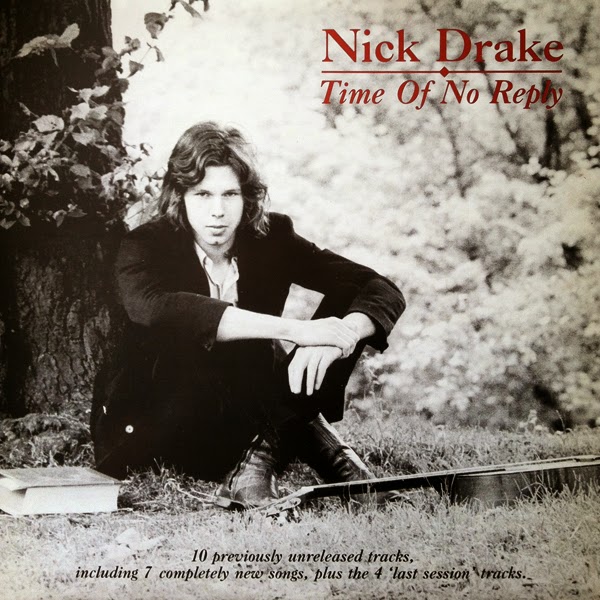
An Explanation of Nick Drake's Official Discography

Nick Drake's enormous talent has been expounded upon in countless other places, as have his sad life story, the history of his official and bootlegged releases, and the value of exploring the far reaches of his recordings. What's far more difficult to find is a succinct explanation of precisely what material has seen official release, how many times, and where. This is what I intend to set out below for the benefit of anyone who might seek it out.

Tracks listed in bold are exclusive to the album under whose title they are listed.

Before his death in 1974, Drake recorded three note-perfect studio albums: Five Leaves Left, Bryter Layter, and Pink Moon. During his lifetime, an eponymous compilation album was also released, featuring only tracks from the first two studio albums. As of June 2015, there have been 9 posthumous releases. Of those nine, four - Fruit Tree, Heaven in a Wildflower, Way to Blue, and Tuckbox - do not feature any exclusive tracks. (These are discussed at the end of the post.) Details of the remaining five are as follows:

Time of No Reply was released in 1986, and is the only posthumous album of Nick Drake's to feature a full length album's worth of music that had never been officially released before. The majority of the album dates back to the Five Leaves Left sessions or before, including songs that didn't make the cut, demo versions of some that did, and an alternate arrangement of "Thoughts of Mary Jane." It then concludes with four of the five songs Drake recorded in his abortive 1974 recording session. ("Tow the Line" was not discovered on the reel until later, and therefore was not included.)

Made to Love Magic was released in 2004 and is the successor to Time of No Reply. It features 13 tracks instead of 14: gone are "Man in a Shed," "Fly," "Been Smoking Too Long," and "Strange Meeting II," in favor of demos of "River Man" and "Three Hours," plus the aforementioned "Tow the Line." All of the tracks are remastered, and the difference in sound quality is dramatic. Of the 10 tracks that overlap with Time of No Reply, only 5 are identical to the versions found on that album: "Joey," "Thoughts of Mary Jane," "Clothes of Sand," "Black Eyed Dog," and "Voices" (whose title has changed from "Voice from the Mountain"). Of the remaining tracks, "Rider on the Wheel" has received a new stereo mix, but is otherwise the same as the preceding version. "Magic" (again, a retitling of "I Was Made to Love Magic") and "Time of No Reply" have newly-recorded arrangements by Robert Kirby, written for the Five Leaves Left recording session but abandoned when those tracks were omitted from the debut album. The remaining two tracks, "Mayfair" and "Hanging on a Star," are alternate versions of those found on Time of No Reply.

Family Tree was released in 2007 and contains 28 tracks. These are mostly early demo recordings, several of which feature other members of his family. Of these, only two are versions of songs found on his studio albums - demos of "Day Is Done" and "Way to Blue" - both, again, from Five Leaves Left. The opening track is a snippet of "Come Into the Garden," a different take of which is presented in full later in the album. Two of the tracks are versions of demos found on Time of No Reply: "Been Smoking Too Long" is ostensibly the same recording, while "Strange Meeting II" is an alternate version that includes brief commentary on the song before and after, as well as a laugh and a few inconspicuously muffed lyrics during the performance. The remaining 22 pieces are entirely unique within Drake's officially released output.

A unique wrinkle in the picture is provided by A Treasury, which was released alongside Made to Love Magic in 2004. It mostly serves (respectably enough) as a greatest hits collection, featuring "Magic" and "Black Eyed Dog" alongside 13 tracks from the studio albums. One UK-only version of the album contains a 50 second long version of "Plasir d'Amour" as a hidden track, never released anywhere else. Rather irritatingly, then, this snippet marks the only part of the official discography not readily accessible to American audiences. In the name of due diligence, I bought a British copy of A Treasury, but when the CD arrived from London, it too contained only 15 tracks. "Plasir d'Amour" can be heard on YouTube and has been found on Rapidshare.

[Edit added 6/2/2015]: The final piece of the puzzle, to date, is The John Peel Session. Drake recorded five songs for Peel's famous radio show on August 5, 1969. These unique recordings of otherwise available songs were unreleased until 2014, when they were bundled with the special edition of the authorized biography Remembered for a While. Later in 2014, the songs were released digitally for standalone purchase from British online retailers, though a clerical error rendered them unavailable for purchase in the US. I alerted the Drake estate to the malfunction, and 2 weeks later, they were at long last made available for sale on Amazon and iTunes.

* * *

Summary: Acquiring the three studio albums, Made to Love Magic, and Family Tree (or else Tuckbox, which contains all 5 of these albums) will give you all but 14 officially released Nick Drake recordings. Adding Time of No Reply and The John Peel Session fills in 13 of the missing 14; the last is found on the UK-only version of A Treasury (see above).

* * *

[On those final 3 otherwise undescribed compilations: Heaven in a Wildflower contains 14 tracks from the studio albums. Way to Blue contains 16 tracks from the studio albums and Time of No Reply; it differs by 4 tracks from A Treasury, and is generally better-selected, though it was never remastered and lacks the rare bonus track. Fruit Tree is a compilation that reincarnated 3 times: first as a studio album collection with the first 4 recordings from 1974 appended to the end of Pink Moon, then as the studio albums plus Time of No Reply, and finally as the studio albums plus the Nick Drake documentary A Skin Too Few. With the 2013 release of Tuckbox, it seems likely that Fruit Tree has been supplanted. The only negative consequence of this is that A Skin Too Few, which has never been released anywhere else, seems destined to become unavailable; for now, though, like "Plasir d'Amour," it can be found on YouTube.]

Saturday, April 19, 2014

Out of Print Gems: Paul Simon - "The Boy in the Bubble (Extended Version)"

Obsolete technology is always a source of curiosity. Some examples were replaced by superior versions of essentially the same idea; others never got off the ground; for still others, it's hard to understand how they ever existed at all. One example of the lattermost is the CD single, which willfully sacrificed more for less. The format succeeded 7" vinyl and was roughly contemporaneous with the cassette single. All 3 formats were cheaper than their album counterparts and featured correspondingly less music. However, where the record contained less vinyl and the cassette less tape, the CD was unapologetically placed onto the market partially empty. It's hardly a surprise, therefore, that to whatever extent any market for CDs can still be said to exist, the CD single has officially become thing of the past.

The first CD single was released in 1985. Not long thereafter, with record companies still experimenting with the format, Warner Brothers released a promotional CD single of "The Boy in the Bubble" (the opening track from Paul Simon's landmark album Graceland) for distribution to radio stations. The single was officially released around the world only on vinyl. The 7" versions featured a "Single Remix" on the A side and either Graceland album track "Crazy Love, Vol. II" or the title track to Simon's previous album, Hearts + Bones, as the B side. 12" versions featured an "Extended Version" of the single, one of those two B sides, and (sometimes) the 7" remix.

An otherwise extensive 25th anniversary reissue of Graceland has come and gone, but the single-exclusive tracks remain officially unreleased outside of those original vinyl copies. It's too bad. Though the 7" mix is identical other than fading out 12 seconds sooner, the Extended Version is dramatically different from the familiar mix, or anything else on Graceland. Many of the African-inspired tracks on the album were, in fact, born from extended jams, which were pared down later to best suit the sensibilities of Simon's radio-listening audience. For historical interest alone, it's worthwhile to hear some of what a Get Back-style Graceland might have sounded like. It also helps that the Extended Version of "The Boy in the Bubble" is an outstanding jam, with thunderous drums and a self-harmonized ending that mirrors the ethereal ending of "Under African Skies" (which ultimately made the cut and is heard on the album).

While it's a shame that this mix has never been officially revisited, we're lucky that it was ever released on CD. The only other track on Graceland to be released in a less-edited incarnation was "Diamonds on the Soles of Her Shoes," released as a 12" mix only in the UK and Germany, and only on vinyl. The rest may never be heard - at the very least, not until Graceland's next round-number anniversary rolls around. Until then, you can download a 320kbps copy of the extended "Boy in the Bubble" (and the useless "remix," for good measure) here.