Thursday, February 23, 2012

Ailing Cleveland

In 1893, Grover Cleveland - the US President commonly remembered as little more than the only Commander in Chief to serve two terms that weren't consecutive - disappeared for five days, having boarded a friend's yacht and not returned to shore. Though his term coincided with a burgeoning era of American journalism (in volume, if not universally in accuracy), standards being as they were at the time, his prolonged absence wasn't considered terribly unusual, and the official excuse of a leisurely fishing expedition marked by the extraction of a bad tooth was taken at face value. In fact, Cleveland was aboard that yacht for a then-pioneering surgery to remove a cancerous growth from the roof of his mouth. It had been decided that the surgery had to take place in secret to preserve national faith in the recently-reelected Cleveland - and by extension, the economy, which was faltering under the weight of railroad bankruptcies and a crisis over the question of a Silver Standard. (Oral cancer was a particularly touchy subject for the contemporary American public as it had recently killed Ulysses S. Grant, following an extended battle that had been covered with morbid curiosity in all the country's newspapers.) The story was broken by a single reporter, E.J. Edwards, who would face lasting repercussions for his journalistic daring.

This story is covered in The President is a Sick Man, an outstanding book by Matthew Algeo. The narrative is written in a compulsively entertaining fashion, making for presumably the most entertaining history yet written of an otherwise forgotten President. The book also does an excellent job of providing a succinct, detailed explanation of factors that contributed to the cover-up - Grant's death, and especially the Free Silver movement - and the evolution of modern medicine. The latter is particularly appropriate, given not only the stature of the patient, but the extremely complicated nature of the surgery itself. Despite being only a handful of years removed from the advent of antiseptic surgery, the skilled medical team managed to leave a wound that healed quickly even by modern standards, and to craft an adequate prosthesis to leave Cleveland's speech and appearance (relatively) unchanged by the radical alteration in the shape of his mouth. Cleveland's cancer was also never known to recur: certainly, it never reappeared in his mouth, and though he was too fat to check for certain using the diagnostic tools of the age, his eventual death (15 years later!) was not suspected to be related to cancer metastasized from his mouth. Of course, this alone led interested doctors to question for years the nature of his tumor. The questions were finally answered in March 1980, when studies on the preserved remains of the tumor were published in Transactions and Studies of the College of Physicians of Philadelphia. Cleveland was found to have had verrucous carcinoma, a comparatively benign cancer that rarely metastasizes, but one that would have restricted his eating and breathing if left untended. The doctors were thus posthumously found to have been precisely right in their choice of treatment - a fitting cap to an already remarkable feat. The study itself, published by John Brooks, Horatio Enterline, and Gonzalo Aponte, is incredibly difficult to track down, online or otherwise. When I wrote to ask him if he knew where I could find a copy, Mr. Algeo was kind enough to scan all 26 pages and email them to me. On the off-chance that anyone else on the internet was looking, and with any luck to save him the trouble of sending them again, the article can be downloaded here.

Saturday, February 18, 2012

U2 - "Please"

In 1997, U2 released Pop, the band's ninth studio album and a continuation of the electronic influence that had defined its sound since the beginning of the decade. Unlike its predecessors, which had been huge critical and commercial successes, Pop fell flat. The production values that had made Achtung Baby and Zooropa such exciting records here lacked the same resonance, and perhaps partly in consequence, most of the album came off as uninspired - a term which for better or worse had never applied to U2 before. Over time it was revealed that Pop had been produced under enormous time constraints and that none of the band members had been satisfied with the final product, even prior to the critical drubbing. Tinkering with the better songs on the album continued well after the release date, both in studios, where the band's career-long fascination with remixes would pay handsome dividends, and onstage, during the infamously elaborate PopMart Tour. Ultimately, many of these songs would only reveal their true caliber in live performances, and many of the resultant recordings were released along with singles from the album.

One such example is the single release Please, which includes fine live recordings of "Where the Streets Have No Name" and "With or Without You," but centers around material from Pop. The CD ends with a live rendition of "Staring at the Sun," which substitutes its clunky in-studio sound for a stripped-down acoustic duet between Bono and The Edge that enhances its previously obscured emotional depth. The true highlight, though, comes from the title track. "Please" was surely one of Pop's strongest tracks, benefiting, in addition to quality songwriting, from an unobtrusive studio production that's retained in the cut that leads off the single. The song, a denunciation of ongoing sanctimony and violence in the fight for Irish autonomy, builds up to a crescendo over the course of its five minute duration, and was allowed to do so in an unassuming way that suits its earnest lyrics. The live version that follows it (see below) is nonetheless a considerable improvement. Bono turns in an appropriately less understated vocal, which comes completely unhinged at the end of the track and speaks to the mounting frustration at the refusal to compromise on both sides of the dispute, in addition to the mounting civilian casualties. Even more effective is Larry Mullen Jr.'s reprisal of the iconic martial drumbeat from "Sunday Bloody Sunday" midway through the song - it not only points ahead to the return to basics that the band would adopt for their next album, All That You Can't Leave Behind, but in invoking an protest song released nearly 15 years earlier, also offers an unsettling reflection on the inevitable cycling of history and war. Following the terrorist attacks of September 11, 2001, U2 would decide the song was no longer appropriate to play. Nonetheless, Please offers compelling evidence of how good the band could be even at the lowest point of their career, and is perhaps the best place to start for Pop-era material.

Friday, February 3, 2012

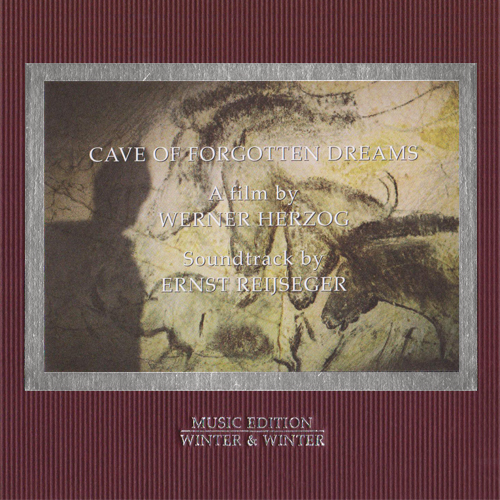
Ernst Reijseger - "Cave of Forgotten Dreams"

Werner Herzog's 2011 documentary Cave of Forgotten Dreams was rightfully released to near-universal critical acclaim. It's a lushly filmed portrait of the miraculously well-preserved cave paintings found in a French cave that was hermetically sealed millennia ago by a landslide, peppered with just enough of Herzog's typical eccentrics to lend the film flavor (including a perfumer who seeks out hidden caves in the countryside by smell). Somewhat lost in the mix was the amazing score for the movie, composed and in part performed by Dutch cellist Ernst Reijseger. Even for the score of a frequently silent movie, Reijseger's music is an integral part of the film's appeal. Throughout, he contrasts soaring choral parts with the resounding bass of his cello (specially created to support an extra low F string), creating precisely the ethereal sound necessary to accompany a trip that literally carries you back twenty-five to thirty-two thousand years in time. The wordless sound of human voices adds to the peculiar humanity of the individuals who occupied the cave - and they truly are individuals, from a hand-painter with a noticeably crooked pinkie to a child accompanied or followed into the cave by a wolf. Like the film itself, Reijseger's score was inexplicably passed over for an Academy Award nomination, but luckily an extensive soundtack - 73 minutes of music from a 90 minute film - is available here. Herzog also devoted the DVD's only special feature to the music, a 40 minute short film entitled Ode to the Dawn of Man that documents the recording of the soundtrack. You can see an excerpt below, featuring Reijseger and organist Harmen Fraanje performing "Shadow."

Friday, November 18, 2011

The Beach Boys - "SMiLE"

In the wake of Pet Sounds, as The Beatles released Revolver and popular music began to move irretrievably beyond its humble origins, Beach Boy Brian Wilson planned a follow-up album that would match and even surpass its already legendary predecessor. The album was to be called SMiLE, and famously, though the band and an incredible assortment of musicians would spend two years in the studio, what was finished of the album would be shelved. (The famous exception was "Good Vibrations," released while the sessions were ongoing and considered one of the greatest songs ever recorded.) Rumors circulated about Wilson's increasingly erratic behavior; nearly all of them, from having his musicians wear fire hats to building a giant sandbox in his dining room to house his grand piano, turned out to be true. Decades passed, and as innumerable rumored at-long-last releases of the album came and went uneventfully, both SMiLE and its creator assumed mythic statures. For years after, the Beach Boys continued to release material, with or without a dazed Wilson on board. Some of it was good, some of it appalling, but with the exception of a handful of intermittently released, retouched tracks, none of it was SMiLE. Throughout, fans rabidly traded session bootlegs and raved about the quality of the music, yet it appeared the vault was nonetheless sealed for good.

After years of reclusive behavior and the deaths of his brothers and bandmates, Dennis and Carl, with the help of friends, Wilson recorded a solo version of SMiLE in 2004. Though the release and accompanying tour were widely acclaimed, there remained no word on the original recordings - neither news of a future release nor an explanation of why they'd never been issued from Wilson, who despite his resurgance remained notoriously uncomfortable with interviews. Finally and suddenly, in March 2011, the band and its label confirmed the release of SMiLE and a wide selection of the studio sessions that went into its production. Appropriately enough, the announced release date was further pushed back three times, but on November 1, the album known for 45 years as the most famous one never released finally hit stores, lovingly remastered and ready for posterity.

To say that the expectations for the album were impossibly high could only be an understatement: SMiLE's tortured history notwithstanding, as early as 1966 Dennis Wilson had said the new recordings "[made] Pet Sounds stink," and he was hardly alone among insiders. Almost inconceivably, even if the youngest Wilson was somewhat exaggerated, SMiLE fails to disappoint. The album, which until recently existed only in fragments and without a tracklist, sounds, if anything, more cohesive than Pet Sounds. To create his music, Brian Wilson sketched out modules he called "feels," fragments he would then interweave into a cohesive whole. The result is exactly what he intended to achieve: the multiple movements of "Good Vibrations" expanded to an entire album, ingeniously peppered with recurring leitmotifs that lend the work a unity even more remarkable given the circumstances. The album's lyrics, penned by Van Dyke Parks (a friend of Wilson's and songwriter in his own right), are fittingly concerned with sweep, grandiosely attempting to encompass the American saga down to the plights of Native Americans and the environment. The undeniable flow of Parks' words generally outweighs their obscurity (and equally undeniable pretension), and results in a number of songs that qualify as great on those grounds alone.

Yet SMiLE is unquestionably about the music, and as Pet Sounds suggested it could, it entirely transcends the confines of rock (even by retrospective standards, much less those of its day), staking a claim on Wilson's behalf for the title of greatest American composer - fully deserving of comparison to Bernstein and Copland, Mingus and Ellington. Beginning with the soaring a capella chorale "Our Prayer," the album promptly gives way to an astounding variety of musical styles. In keeping with the album's Americana fixation, it draws from every corner of American music, and in so doing employs instuments ranging from the simple musical jug to the electro-theremin, tenor ukelele, and Beach Boy favorite bass harmonica. Then of course, there are the harmonies that made the group famous to begin with. As in all other facets of his composition, Wilson here pulled out all the stops on vocal arrangements, matching "Our Prayer" on the driving chorus of "Cabin Essence" (mirroring the Iron Horse being sung about) and the undulating "Good Vibrations." The centerpiece of SMiLE is "Surf's Up," which was first released in 1971 on the album bearing its name. That version is a classic itself, and indeed, has always been recognized as one of the band's greatest accomplishments. It was compliled, though - in parts, newly recorded - without the input of Brian Wilson, and it suffers by comparison. The 1971 arrangements were more than competently overseen by Carl Wilson, yet Brian's mastery as a producer reveals itself in the minor details: for instance, the punchier bass was undoubtedly due to Wilson's insistance that it be played with a pick (a recurring trend in the bonus discs), and it noticably strengthens the arrangement of the first section of the song. More importantly, Brian's 1966 vocal for once trumps his brother's angelic alto, imbuing the song with a raw emotion that years later Brian would reveal he worried about exposing to the public. The song is emblematic of the importance SMiLE's official release: any faithful recording of this material would qualify as great, but only here do we find it as conceived and personally directed by the era's most singularly visionary composer in popular music, and sung by those six golden voices in their prime. It's simply one of the greatest albums ever released.

The SMiLE Sessions box set contains 4+ discs of music from the studios, recorded between 1966 and '67; they offer more enlightenment than enjoyment on their own grounds. What's clear from the outset is the vision and purpose of Brian Wilson, and it's evidence that dispels the notion of an acid freak slowly losing his mind in a studio (though it wasn't for lack of acid). As he drives through take after take, either singing with the other 5 Beach Boys crowded around one mic or directing studio musicans from the booth, he displays an uncanny understanding of how the disparate parts being recorded are going to mesh with one another and an equally impressive ability to pick out the one clarinet in the ensemble who sounds a little flat. Though the extensive liner notes admit the same thing, these 4 discs - which constitute only a small fraction of the music actually recorded during these sessions - show exactly why SMiLE could probably never have been released in the 60s, or really, ever before the last decade. In addition to the strains of satifying both public and label, Wilson and co. would have had to assemble a literal mountain of tape into a cohesive sound collage using nothing but razors and glue. As the digital revolution enabled the delayed compilation of these marvelous recordings, so too did it make it possible to feasibly release enough studio takes to demonstrate exactly how hard it was to translate Brian Wilson's vision to wax. It's often astounding to hear elements of the music in the context of its creation -  especially the vocals, and especially to find that something so moving was most often directly preceded by strategizing or plain joking around. The special edition can nonetheless be easily skipped by all but the most interested: the music itself hardly requires any external proof to enhance its appreciation.

Tuesday, October 18, 2011

Jelly Roll Morton - "Ganjam"

To the extent that he's remembered at all, jazz pioneer Jelly Roll Morton's legacy lies in his oft-quoted (and misunderstood) claim to have invented jazz in 1902 and in his immortal 1926/7 recordings with his Red Hot Peppers (including such masterpieces as "Black Bottom Stomp" and "Grandpa's Spells"). Morton spent most of the years after 1927 nearly broke, struggling to scrape by in various setups around the country. His career experienced a minor resurgance in the last 3 years of his life, beginning with an 8-hour series of recorded interviews for the Library of Congress with musicologist Alan Lomax in 1938 and followed by a final spate of recording sessions that would produce some mostly middling bandwork (with some exceptions, marred by musicians that couldn't match their elite Red Hot Pepper counterparts) and some of the finest solo sides of his career. He nonetheless died broke in 1941, remembered by Down Beat (see above) but already forgotten by most of the record-buying populace, who had moved over to swing at least a decade earlier and subsequently dismissed him as an artifact of what was then mostly referred to as Hot Jazz.

To his dying day, however, Morton continued planning for a resurgance, and unbeknowst to them - and to virtually anyone for decades after - he had, in fact, been absorbing the musical changes to which he appeared to so stubbornly be refusing to adapt. In fact, one of his last compositions, the cryptically-titled "Ganjam," not only is arranged for an adapted big band, but even looks past swing, presaging the swirling haze and carefully-measured dissonance that would characterize some of the finest work of Duke Ellington, and in particular, Morton acolyte Charles Mingus, even more than 20 years later. In their excellent biography Jelly's Blues, Howard Reich and William Gaines describe the piece as unfolding "like the first movement of a symphony - complete with primary and secondary themes, a development section, and a recapitulation." To their thinking, had "Ganjam" - with its "astringent chords, bizarre key changes, and exotic scales of a sort that would not be heard in jazz until at least the early 1950s" - been heard in Morton's lifetime, contemporary musicians would have had to acknowledge him as "the most forward-thinking and accomplished composer in jazz."

"Ganjam" wasn't heard then, though, nor at any point until six years after its discovery in the archives of Morton archivist William Russell following his death in 1992, when it received its inaugural performance in May 1998. With the exception of a handful of subsequent live performances, it would not be heard again for 7 years, after which the piece was finally recorded by trumpeter Randy Sandke for his 2005 album Outside In. The album is actually bookended by two versions of "Ganjam," the first a wonderful arrangement by Sandke, and the closer, "Ganjam" as written down by Morton himself. It's an astounding piece for anyone familiar with his work, containing plenty of Morton hallmarks that help with orientation - for instance, the famous Spanish Tinge or The Roll's beloved breaks - but otherwise bearing little resemblance to anything else in his catalog. (One truly wonders what he could have done had his highly preventable death been postponed even a few years.) Sandke's recording of Morton's arrangement can be heard below, available online in its entirety for the first time; interested parties are encouraged to support the artist by picking up the track (or the entire album) here.

Sunday, September 11, 2011

9/11/11

Ballpoint pen, markers, pencil,
newspaper, newspaper ash

September 11, 2001 was in many ways a nightmarish initiation into adulthood - a demonstration of mankind's oxymoronic capacity for inhumanity on an inconceivable scale, experienced transcontinentally as though it were occurring in view of my family's front door. A decade later, words remain hard to come by, and in any event inadequate (as, lamentably, do drawings, though the example reproduced above - drawn in my annual state of abstract sadness and anger after a night of little sleep - was certainly heartfelt). I'll certainly never forget that awful day, and can never forgive those hateful cowards who then did and will continue to deliberately and specifically target innocent civilians. More powerfully than I can express in prose, this photo of Robert Peraza embodies what evil leaves in its wake.


In loving memory of the 2977 lives lost and the countless others torn asunder on September 11, 2001

Thursday, September 8, 2011

Out of Print Gems: The Genius of Ravi Shankar

Though Ravi Shankar's recording career in the West began in the mid-1950s, it wasn't until after his introduction to George Harrison in the mid-60s that his fame (and the profile of Indian classical music as a whole) transcended the fringes of Western cultural consciousness. Within three years of Harrison's inclusion of the sitar on "Norwegian Wood," Indian instrumentation on pop records had already become something of a successful cliche, used to lend psychedelic ambience to the work of derivative songwriters unable to create something genuinely trippy on their own. An unintended consequence - and an unwelcome one for Harrison, whose obsessed admiration for the music was genuine - was that sitar music began to sell, primarily as an exotic soundtrack for journeys to altered states of consciousness. Record labels proved shameless in their exploitation of their unexpected target audience for music previously considered genuinely unmarketable, and though their classically trained musicians declined to adapt their art to contemporary tastes, their marketing departments showed no such compunction. Predictably, the anonymous liner notes to The Genius of Ravi Shankar describe the music the album contains as "more of [Shankar's] enthralling psychedelicacies," "as fresh and impelling and new as tomorrow night's dreams." Luckily, as the era in which record labels lost the audacity to publicly suggest that their customers "tune in and turn on" faded, the music endured, meaning large discographies, especially for Shankar and his most frequent collaborators. Liner notes aside, The Genius is something of an anomaly in that it's faded from print. Though most of Shankar's albums have been multiply reissued, and though Genius was issued on Columbia - perhaps the king among labels of quality rereleases of its back catalog - it has appeared only once on CD as it was originally issued. The music itself, if perhaps not quite as memorable as some of his astounding duets with Ali Akbar Khan, is nonetheless up to Shankar's formidable technical standard, and the album also features an excellent tabla solo from an uncredited Alla Rakha. It's a worthy addition to his legendary discography, one that deserves to be detached from its historical pigeonhole and enjoyed on its own terms. Interested parties can download it here.