
Saturday, March 31, 2012
Sounds for the Moon
George Méliès' classic, pioneering 1902 science fiction film Le Voyage dans la lune (A Trip to the Moon) first caught my eye as part of a Bill Nye the Science Guy VHS that I owned as a child, on the subject of the moon. Hardly any of the footage was shown in the episode, but along with the strains of Debussy's Clair de lune played elsewhere in the show, it found a recess in my mind and never left. I first saw the entire 14 minute film in high school, this time on a rented VHS. It wasn't until Air announced that they would be soundtracking a newly restored edition of the film that I found out a color version had ever existed. In fact, Méliès had hand-painted his film, frame by frame, when he had first produced it. The DVD release, remastered from these hand-painted original frames by Lobster Films, proved a remarkable change from every version of the film I'd ever seen. The eccentric (and understandably inconsistent) coloration nicely compliments the film's bizarre imagery, and it adds an added layer of vitality to a piece of art celebrating the 110th anniversary of its release. Air's enjoyable soundtrack also inspired me to try to sequence my own to accompany the new print, with the unauthorized help of musicians more gifted than myself. You can watch the results below; with or without the music, it's a fascinating spectacle.


Wednesday, March 28, 2012
In Search of 3D
On April 19, 2004 I abruptly lost all vision in my right eye. Among the consequences (which include the name of this blog) was that as the ensuing weeks elapsed, I lost my capacity for depth perception, and my definition of "three dimensional" rapidly became difficult to put into words. I still do perceive shape, particularly in high-light/ strong-shadow conditions, but most shapes carry an outline that makes them look partially flat, at least around the edges. The bottom line is that I am now unable to perceive the world in three true dimensions, as I could growing up. On March 5, the gif file seen below was uploaded to imgur; it was the first time I had seen an image in 3D in almost 8 years.

Presumably, most viewers' experiences looking at this funky drawing won't feel as portentous as my own. However, today I discovered the artist's name, Dain Fagerholm, and a gallery of his Where the Wild Things Are-like work online. As a small token of my thanks for the temporary gift of 3D, I thought I'd throw out a link into the near-infinite void of the internet, and hopefully get him an extra view or two. As an added inducement, here's my favorite so far, "Asylum":


Presumably, most viewers' experiences looking at this funky drawing won't feel as portentous as my own. However, today I discovered the artist's name, Dain Fagerholm, and a gallery of his Where the Wild Things Are-like work online. As a small token of my thanks for the temporary gift of 3D, I thought I'd throw out a link into the near-infinite void of the internet, and hopefully get him an extra view or two. As an added inducement, here's my favorite so far, "Asylum":

Saturday, March 24, 2012
Stormy Applause

Dubinsky's portrait of life under a totalitarian regime is a harrowing one. Certainly, the preconceptions held in the free world regarding Soviet power structure are shown to be true - and the book is a pointed rejoinder to anyone who would suggest that life in the United States, whatever its shortcomings, is not free. Dubinsky provides numerous accounts of the suffering inflicted upon those designated enemies of the state (no matter how arbitrarily), from a vocal Jewish actor who was run down by a government truck and whose entire family was sent to the Gulag, to a Canadian socialism enthusiast who immigrated to the USSR following the Revolution, only to be arrested with his family and shot as a Western spy during the Great Purge. A daughter of the latter man, Olya, was released following Stalin's death and met Dubinsky in Moscow, soon teaching him English and assuming an overarching importance in his life; years of malnutrition suffered in prison left her frail and underdeveloped, however, and she shortly passed away while he was on tour in Siberia. The threat of governmental brutality hung over every aspect of Soviet life, and those who didn't follow the party line were severely punished. For instance, after violinist David Oistrakh refused to sign a letter denying that Israel was a true homeland for Soviet Jewry, agents ransacked his apartment and stole only the least valuable and most irreplaceable of his personal artifacts. Word of threats like these traveled fast, and was enough to keep the vast majority of public figures in line.
Yet Stormy Applause isn't the story of a political regime that "corrodes people the way rust eats into iron," so much as one of those people who lived under it. Inevitably, the paranoiac pressures enforced from above took their toll on all Soviet citizenry, leading to a world in which in addition to one's affairs being in order, one's neighbors' affairs also had to be bad, for the sake of "complete happiness." Following in a grand Russian tradition, the strains of day-to-day living were magnified for Jews, for whom anti-Semitism was so much a fact of life that its manifestations had an astoundingly casual air about them. In the midst of an internal passport check - an inconvenience by no means restricted to Jews alone - policemen would regularly pause at the "Nationality" line (decided by the government) and offer "curious expressions, as if they were wondering, What are you doing in the Soviet Union?" Even among the more socially progressive friends a Jew could make in the Soviet Union, in all likelihood it would only be a matter of time - or in the case of Dubinsky's musician friend Andrei Gorbatov, one heated game of chess - before "strangle [the king]" became "Strangle the Jews."
The emotional release of Stormy Applause comes in the form of music. Dubinsky spent twenty-nine years in the Borodin Quartet, encompassing 3000 concerts, dozens of hours rehearsing for each one spent performing, and very nearly as much time grappling with Soviet bureaucracy over which music he would be allowed to play in public. For composers were subject to the same governmental whims as ordinary citizens, and could, at any time and for any reason, find themselves classified among the Untouchables. Certainly, foreign composers (and especially modern ones) were perennially on thin ice, and such names as "Schönberg, Bern, and Webern were unmentionable words." The stakes were much higher, however, for Soviet composers, for whom official condemnation engendered devastating personal consequences. Dubinsky renders the terror of this kind of life particularly vividly in recounting the life of legendary composer Dmitri Shostakovich, whom he knew personally. Though Shostakovich twice survived ideologically-oriented "civil executions," Dubinsky noted that the "expectation of violent death... became the main theme in [his] music and was stamped forever on his face." Viewed in context, Shostakovich's music was not merely a scathing criticism of totalitarianism, but a very specific outcry against the effects of the Soviet Union on the minds of its citizens - "the destruction of Russian thought and culture, their gradual ruin, which Stalin began and Hitler only wanted to complete." For Dubinsky, to perform Shostakovich was to "[unmask] evil and hypocrisy," to "risk your life for the truth." In writing about his performances, Dubinsky manages to voice these eternal truths as movingly as the composer whose work he so admired. One performance of Shostakovich's Fourth Quartet (a Borodin studio recording of which can be heard below) proved to be one of the most meaningful experiences of his life:
When we sat down, we began playing at once, as if it were the most natural act in the world. We performed the Borodin Quartet No. 2 in D-major, with the unrestrained music-making it required. In Shostakovich's fourth quartet we didn't hold back our emotions. It was surprising that our conversation [with a chauffeur, Helmut, about what took place in concentration camps] had taken place today, because Shostakovich's music was about that very subject - the so-called right of some people to destroy others. With Helmut we had spoken about Hitler's Germany, but now we were playing a piece about Stalin's Russia. By allowing Shostakovich's music to be played, the Soviet authorities had significantly complicated their lives, because the truth about the Soviet regime, concealed so carefully, began to reach the hearts of people all over the world. Judging by the silent hall, it was clear that his tale about twentieth-century tyranny was heard and understood. We ended the concert with Schubert, who, after the Shostakovich, acquired a special philosophical depth: as if regimes and rulers may come and go but another life, pure and elevated, remains undamaged.
Thursday, February 23, 2012
Ailing Cleveland
 In 1893, Grover Cleveland - the US President commonly remembered as little more than the only Commander in Chief to serve two terms that weren't consecutive - disappeared for five days, having boarded a friend's yacht and not returned to shore. Though his term coincided with a burgeoning era of American journalism (in volume, if not universally in accuracy), standards being as they were at the time, his prolonged absence wasn't considered terribly unusual, and the official excuse of a leisurely fishing expedition marked by the extraction of a bad tooth was taken at face value. In fact, Cleveland was aboard that yacht for a then-pioneering surgery to remove a cancerous growth from the roof of his mouth. It had been decided that the surgery had to take place in secret to preserve national faith in the recently-reelected Cleveland - and by extension, the economy, which was faltering under the weight of railroad bankruptcies and a crisis over the question of a Silver Standard. (Oral cancer was a particularly touchy subject for the contemporary American public as it had recently killed Ulysses S. Grant, following an extended battle that had been covered with morbid curiosity in all the country's newspapers.) The story was broken by a single reporter, E.J. Edwards, who would face lasting repercussions for his journalistic daring.
Saturday, February 18, 2012
U2 - "Please"
In 1997, U2 released Pop, the band's ninth studio album and a continuation of the electronic influence that had defined its sound since the beginning of the decade. Unlike its predecessors, which had been huge critical and commercial successes, Pop fell flat. The production values that had made Achtung Baby and Zooropa such exciting records here lacked the same resonance, and perhaps partly in consequence, most of the album came off as uninspired - a term which for better or worse had never applied to U2 before. Over time it was revealed that Pop had been produced under enormous time constraints and that none of the band members had been satisfied with the final product, even prior to the critical drubbing. Tinkering with the better songs on the album continued well after the release date, both in studios, where the band's career-long fascination with remixes would pay handsome dividends, and onstage, during the infamously elaborate PopMart Tour. Ultimately, many of these songs would only reveal their true caliber in live performances, and many of the resultant recordings were released along with singles from the album.
 One such example is the single release Please, which includes fine live recordings of "Where the Streets Have No Name" and "With or Without You," but centers around material from Pop. The CD ends with a live rendition of "Staring at the Sun," which substitutes its clunky in-studio sound for a stripped-down acoustic duet between Bono and The Edge that enhances its previously obscured emotional depth. The true highlight, though, comes from the title track. "Please" was surely one of Pop's strongest tracks, benefiting, in addition to quality songwriting, from an unobtrusive studio production that's retained in the cut that leads off the single. The song, a denunciation of ongoing sanctimony and violence in the fight for Irish autonomy, builds up to a crescendo over the course of its five minute duration, and was allowed to do so in an unassuming way that suits its earnest lyrics. The live version that follows it (see below) is nonetheless a considerable improvement. Bono turns in an appropriately less understated vocal, which comes completely unhinged at the end of the track and speaks to the mounting frustration at the refusal to compromise on both sides of the dispute, in addition to the mounting civilian casualties. Even more effective is Larry Mullen Jr.'s reprisal of the iconic martial drumbeat from "Sunday Bloody Sunday" midway through the song - it not only points ahead to the return to basics that the band would adopt for their next album, All That You Can't Leave Behind, but in invoking an protest song released nearly 15 years earlier, also offers an unsettling reflection on the inevitable cycling of history and war. Following the terrorist attacks of September 11, 2001, U2 would decide the song was no longer appropriate to play. Nonetheless, Please offers compelling evidence of how good the band could be even at the lowest point of their career, and is perhaps the best place to start for Pop-era material.

Friday, February 3, 2012
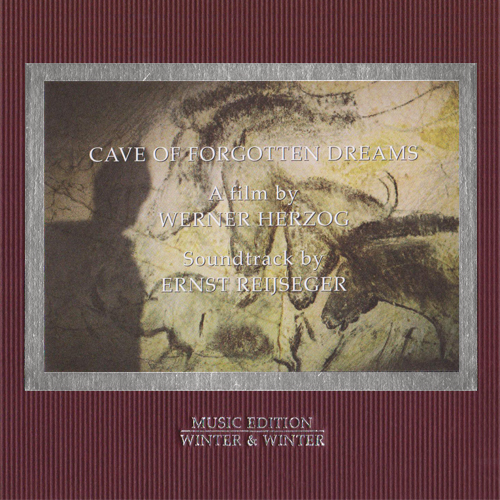
Ernst Reijseger - "Cave of Forgotten Dreams"
Friday, November 18, 2011
The Beach Boys - "SMiLE"
 In the wake of Pet Sounds, as The Beatles released Revolver and popular music began to move irretrievably beyond its humble origins, Beach Boy Brian Wilson planned a follow-up album that would match and even surpass its already legendary predecessor. The album was to be called SMiLE, and famously, though the band and an incredible assortment of musicians would spend two years in the studio, what was finished of the album would be shelved. (The famous exception was "Good Vibrations," released while the sessions were ongoing and considered one of the greatest songs ever recorded.) Rumors circulated about Wilson's increasingly erratic behavior; nearly all of them, from having his musicians wear fire hats to building a giant sandbox in his dining room to house his grand piano, turned out to be true. Decades passed, and as innumerable rumored at-long-last releases of the album came and went uneventfully, both SMiLE and its creator assumed mythic statures. For years after, the Beach Boys continued to release material, with or without a dazed Wilson on board. Some of it was good, some of it appalling, but with the exception of a handful of intermittently released, retouched tracks, none of it was SMiLE. Throughout, fans rabidly traded session bootlegs and raved about the quality of the music, yet it appeared the vault was nonetheless sealed for good.
 After years of reclusive behavior and the deaths of his brothers and bandmates, Dennis and Carl, with the help of friends, Wilson recorded a solo version of SMiLE in 2004. Though the release and accompanying tour were widely acclaimed, there remained no word on the original recordings - neither news of a future release nor an explanation of why they'd never been issued from Wilson, who despite his resurgance remained notoriously uncomfortable with interviews. Finally and suddenly, in March 2011, the band and its label confirmed the release of SMiLE and a wide selection of the studio sessions that went into its production. Appropriately enough, the announced release date was further pushed back three times, but on November 1, the album known for 45 years as the most famous one never released finally hit stores, lovingly remastered and ready for posterity.
To say that the expectations for the album were impossibly high could only be an understatement: SMiLE's tortured history notwithstanding, as early as 1966 Dennis Wilson had said the new recordings "[made] Pet Sounds stink," and he was hardly alone among insiders. Almost inconceivably, even if the youngest Wilson was somewhat exaggerated, SMiLE fails to disappoint. The album, which until recently existed only in fragments and without a tracklist, sounds, if anything, more cohesive than Pet Sounds. To create his music, Brian Wilson sketched out modules he called "feels," fragments he would then interweave into a cohesive whole. The result is exactly what he intended to achieve: the multiple movements of "Good Vibrations" expanded to an entire album, ingeniously peppered with recurring leitmotifs that lend the work a unity even more remarkable given the circumstances. The album's lyrics, penned by Van Dyke Parks (a friend of Wilson's and songwriter in his own right), are fittingly concerned with sweep, grandiosely attempting to encompass the American saga down to the plights of Native Americans and the environment. The undeniable flow of Parks' words generally outweighs their obscurity (and equally undeniable pretension), and results in a number of songs that qualify as great on those grounds alone.
Yet SMiLE is unquestionably about the music, and as Pet Sounds suggested it could, it entirely transcends the confines of rock (even by retrospective standards, much less those of its day), staking a claim on Wilson's behalf for the title of greatest American composer - fully deserving of comparison to Bernstein and Copland, Mingus and Ellington. Beginning with the soaring a capella chorale "Our Prayer," the album promptly gives way to an astounding variety of musical styles. In keeping with the album's Americana fixation, it draws from every corner of American music, and in so doing employs instuments ranging from the simple musical jug to the electro-theremin, tenor ukelele, and Beach Boy favorite bass harmonica. Then of course, there are the harmonies that made the group famous to begin with. As in all other facets of his composition, Wilson here pulled out all the stops on vocal arrangements, matching "Our Prayer" on the driving chorus of "Cabin Essence" (mirroring the Iron Horse being sung about) and the undulating "Good Vibrations." The centerpiece of SMiLE is "Surf's Up," which was first released in 1971 on the album bearing its name. That version is a classic itself, and indeed, has always been recognized as one of the band's greatest accomplishments. It was compliled, though - in parts, newly recorded - without the input of Brian Wilson, and it suffers by comparison. The 1971 arrangements were more than competently overseen by Carl Wilson, yet Brian's mastery as a producer reveals itself in the minor details: for instance, the punchier bass was undoubtedly due to Wilson's insistance that it be played with a pick (a recurring trend in the bonus discs), and it noticably strengthens the arrangement of the first section of the song. More importantly, Brian's 1966 vocal for once trumps his brother's angelic alto, imbuing the song with a raw emotion that years later Brian would reveal he worried about exposing to the public. The song is emblematic of the importance SMiLE's official release: any faithful recording of this material would qualify as great, but only here do we find it as conceived and personally directed by the era's most singularly visionary composer in popular music, and sung by those six golden voices in their prime. It's simply one of the greatest albums ever released.

Subscribe to:
Posts (Atom)